I had the honor to serve at the judges table for the State Championships for POL again this year. Click through here to read about my adventures.
Month: March 2015
Discovery Day 2105
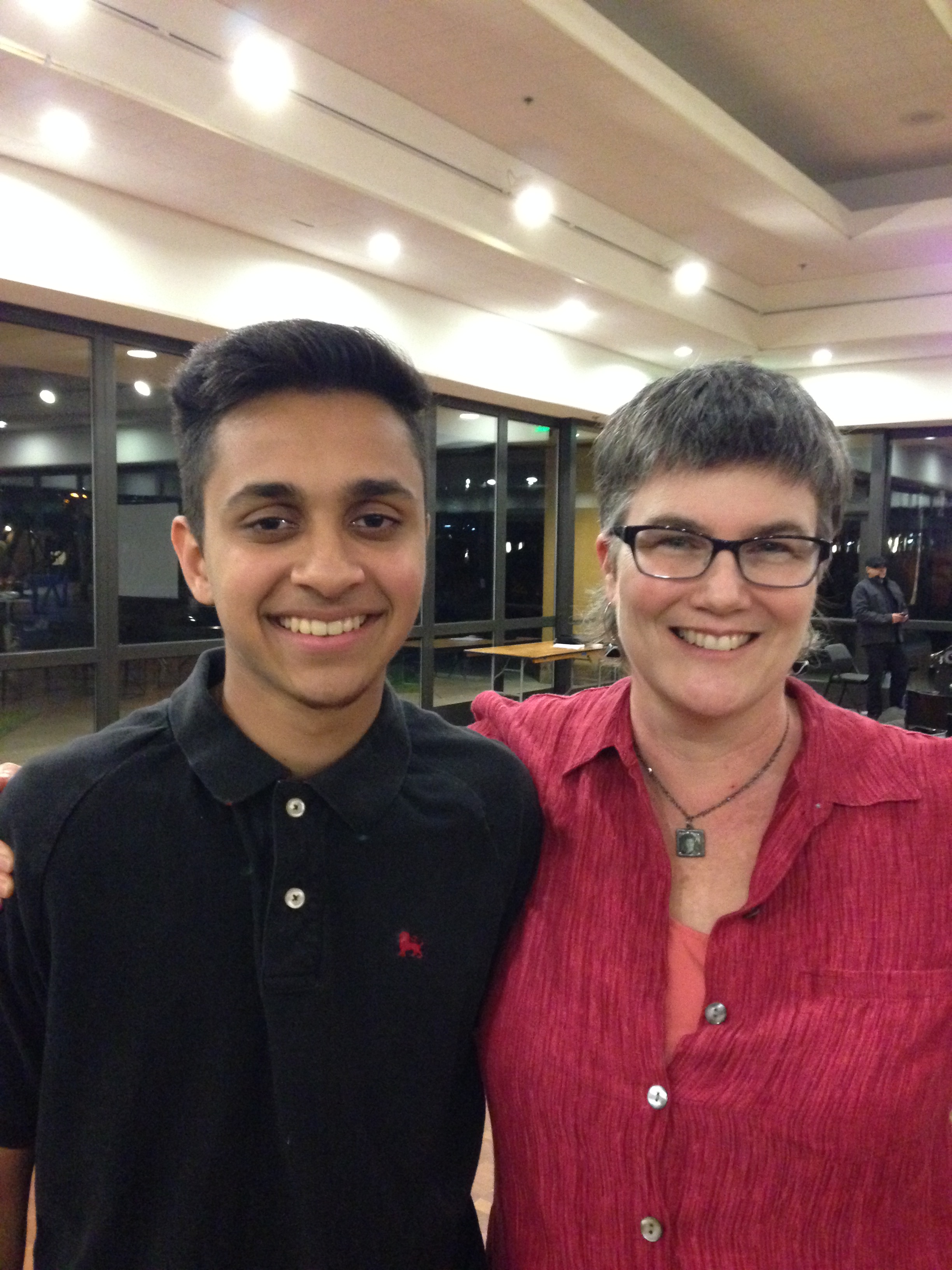
I love Discovery Day. Other schools call it Career Day, or the like, but at Regnart Elementary School in Cupertino, they call it Discovery Day. I first started talking to Regnart students about my life as a poet when my own kids were there. This past month, I had the special privilege of not only talking about being a poet and a poetry teacher, but of explaining what a poet laureate is.
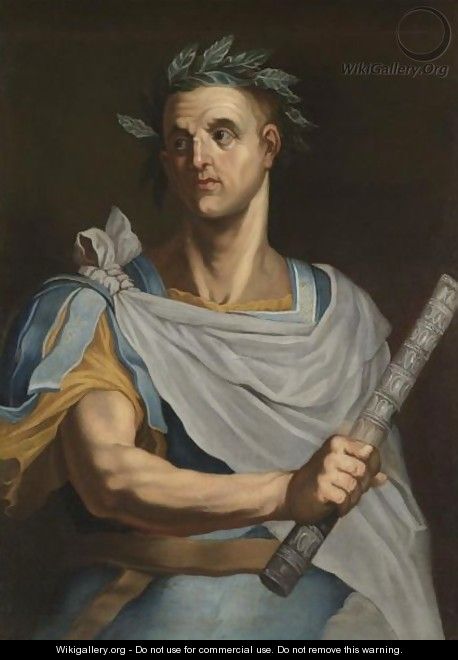
Fortunately, third and fourth graders usually have been introduced to images of Greeks and Romans in togas, with laurel wreathes on their heads. That helps them understand that a laureate is a person recognized for her wisdom or status in a particular field.
Of course, I explain, I’m not really not the most famous or wisest poet around, and the PL status I enjoy is only loaned to me by the city. But they understand that it’s my job to teach about poetry in Cupertino, and several of them remembered seeing me with my magnetic poetry at the Library Anniversary last October.
This year I had a great time, as always, and I talked to the kids about how the Chamber of Commerce had asked me to write a poem for the Lunar New Year. Many kids recalled that we just celebrated the Year of the Ram, Goat, or Sheep, and in each class there was a child who spoke the one word in Chinese that could be translated into any one of these animal words in English. I shared with them my Lunar New Year sestina.
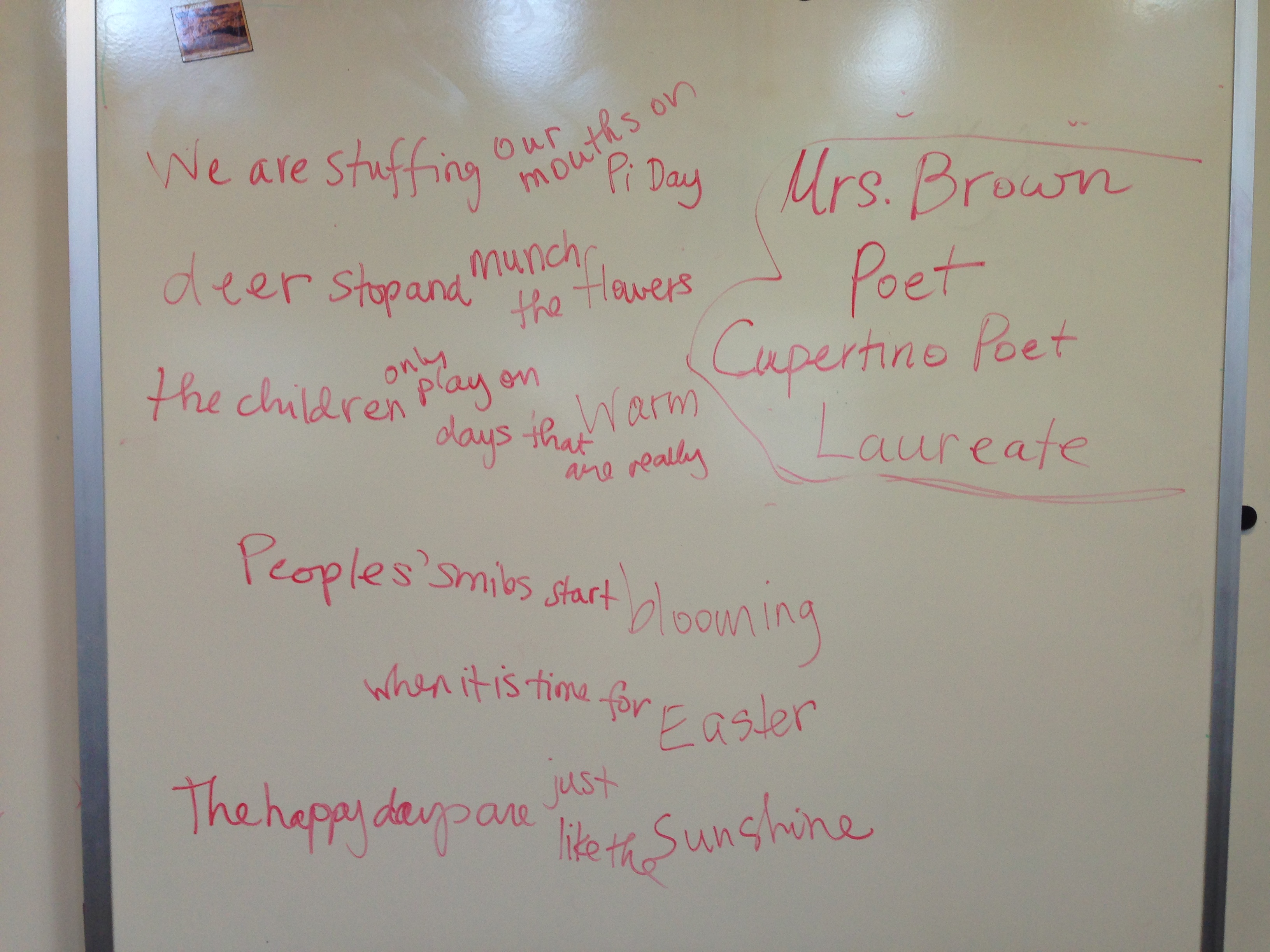
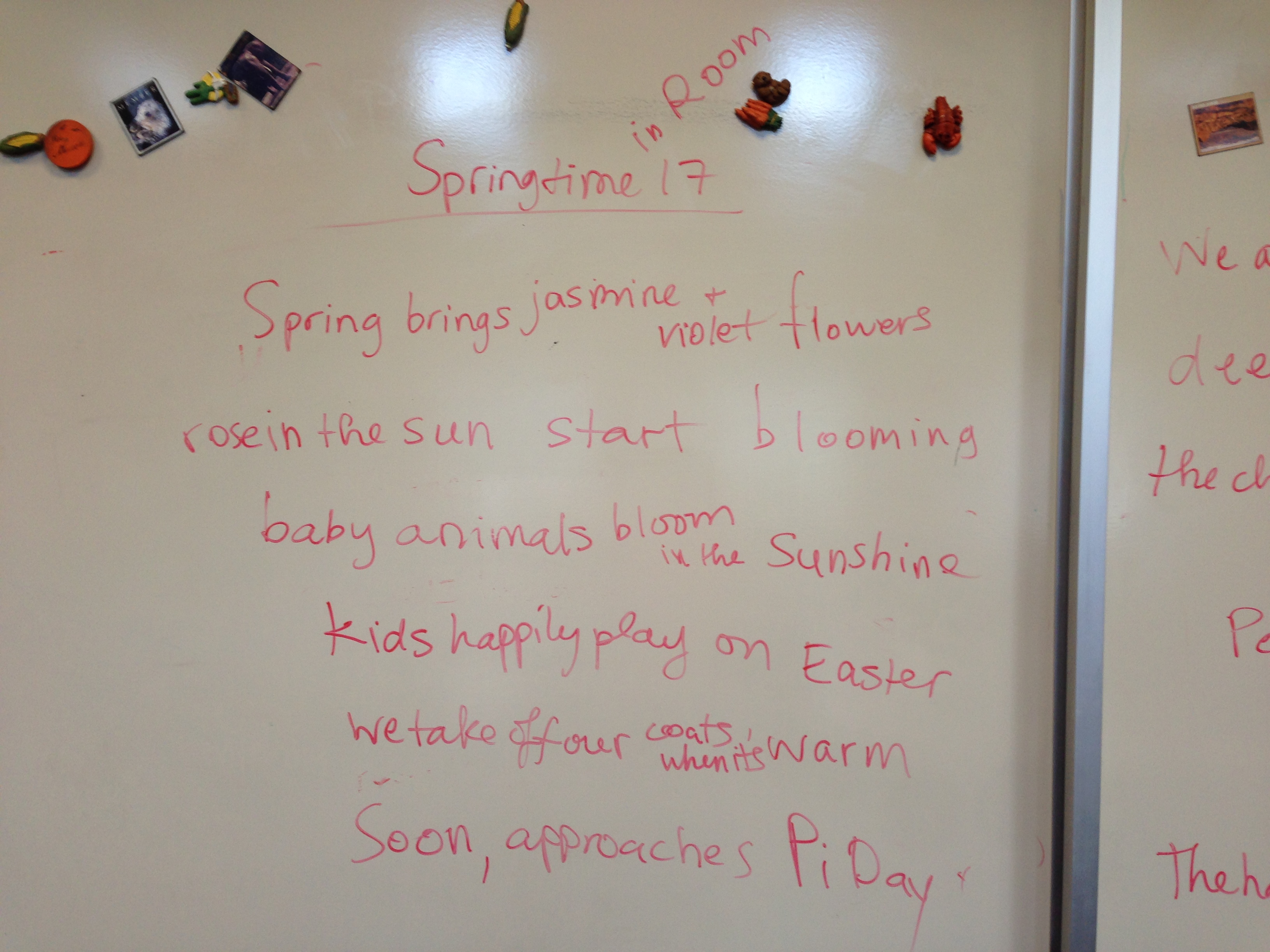
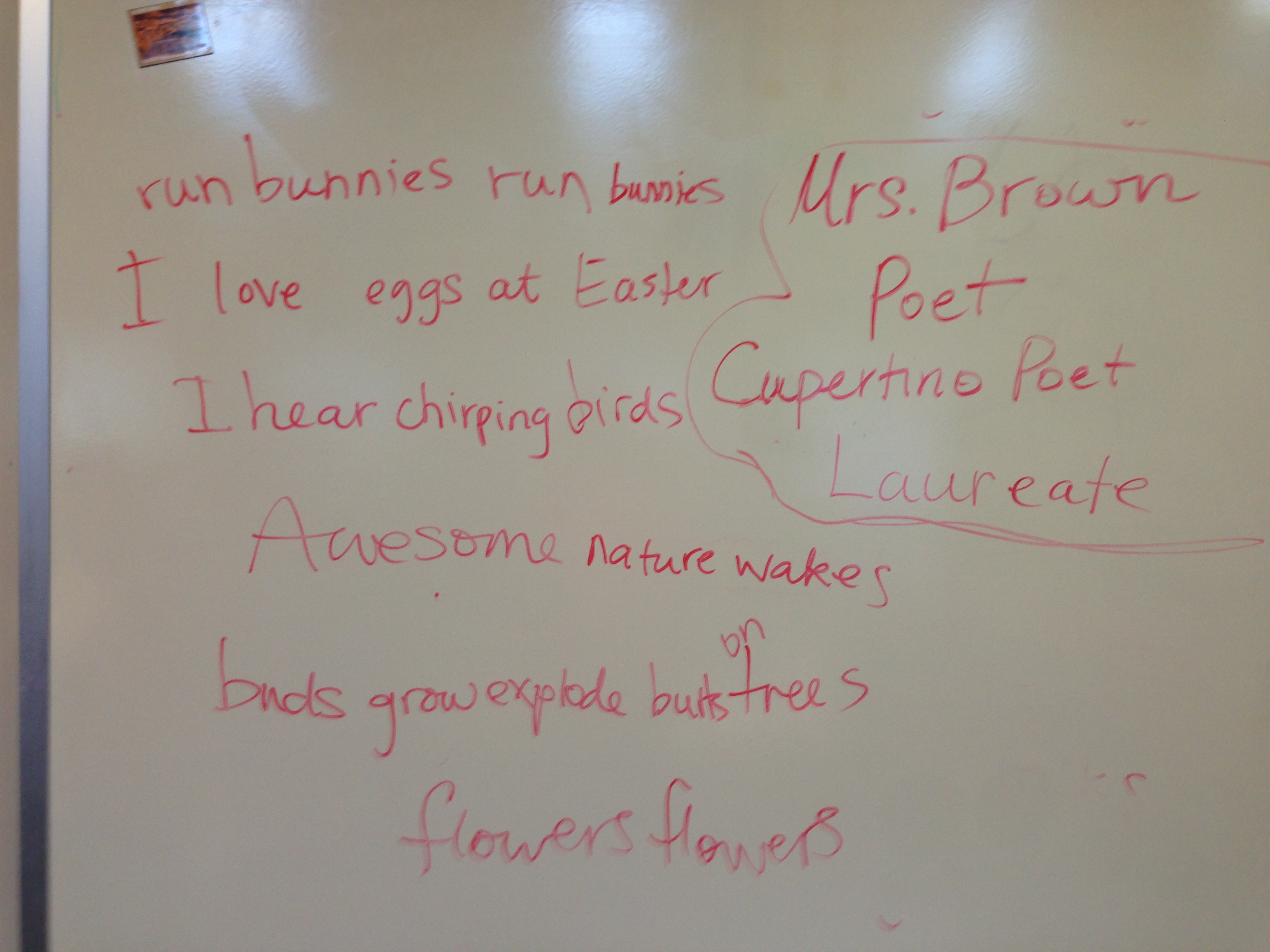
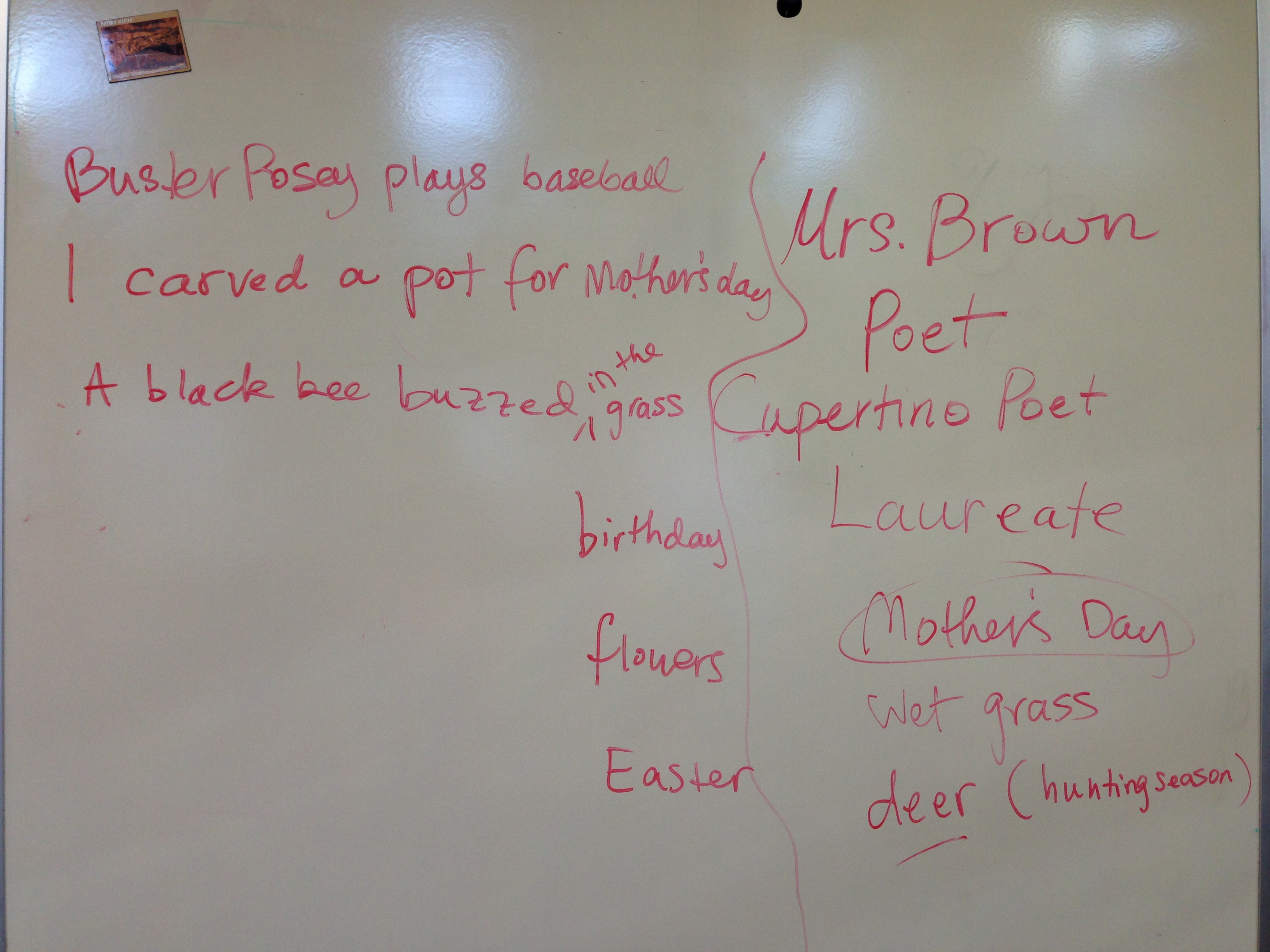
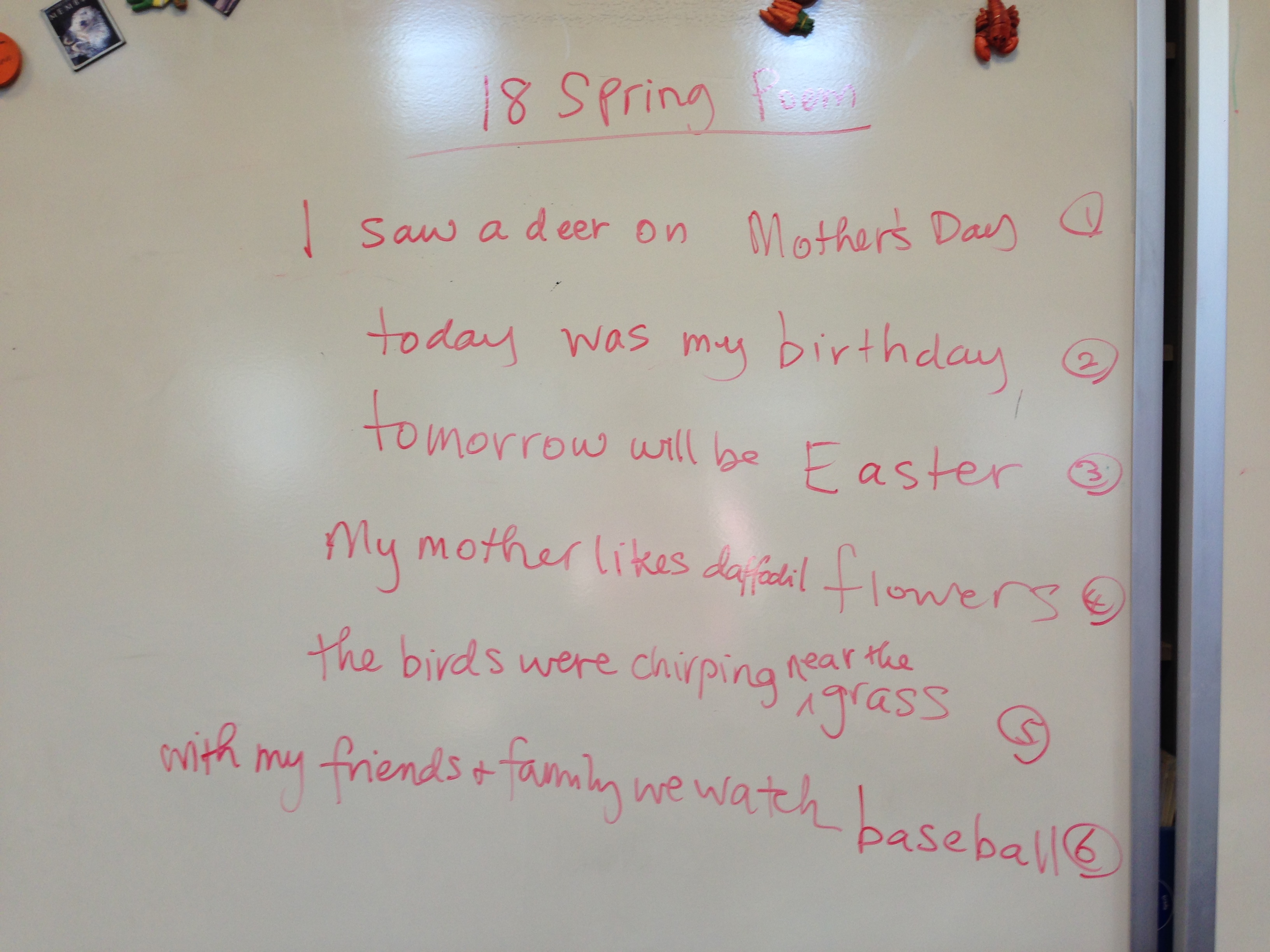
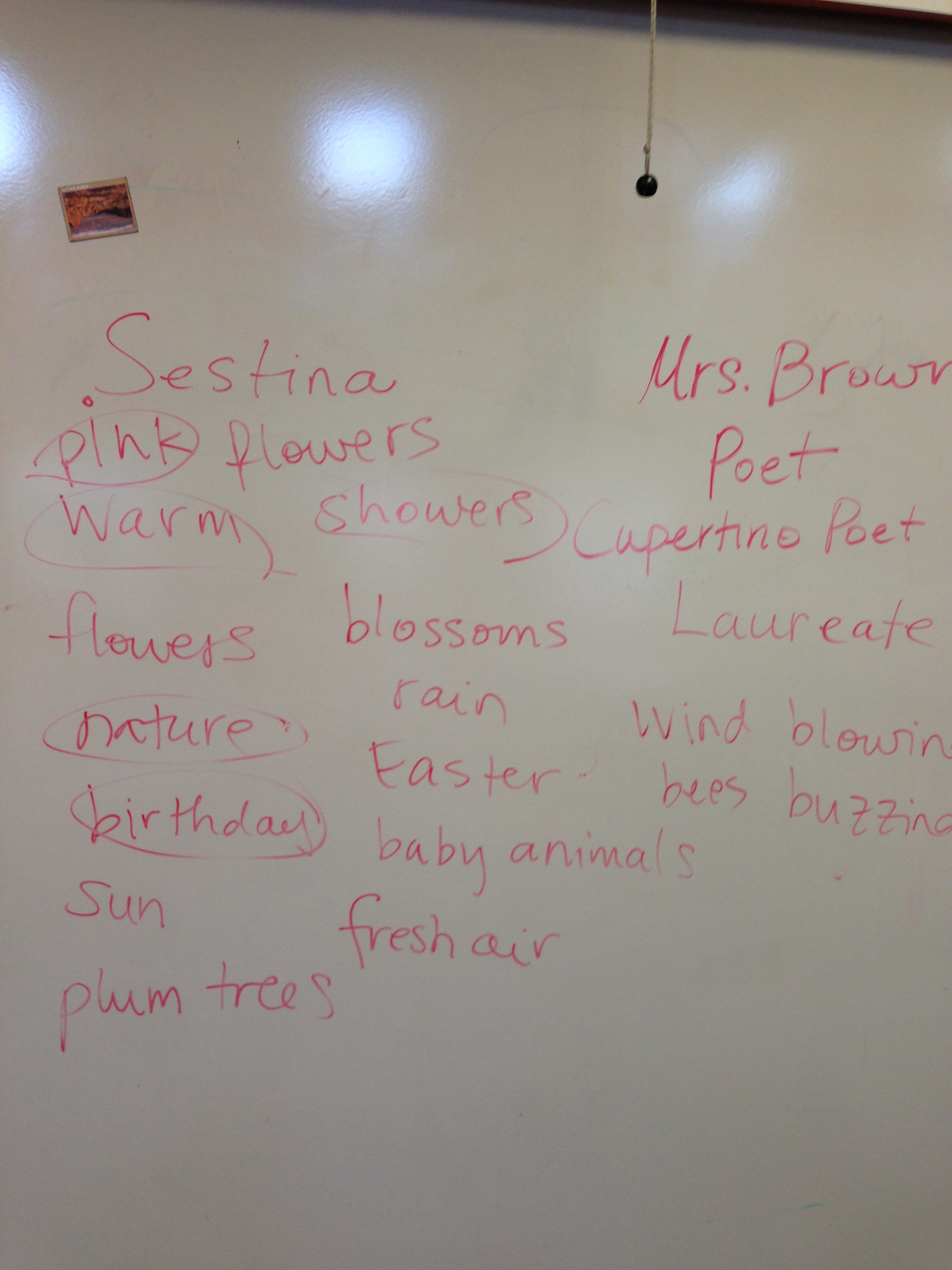
Then I explained that I wanted to write a sestina with them about spring. We discussed how many kids had celebrated Holi, how many celebrate Easter. The kids knew all about St. Patrick’s Day, President Lincoln’s birthday, and April Fools Day. Some remembered Pi Day. We talked about baby animals, the flowers and trees and the smells and the warm air. I pushed them to remember details from their own houses and gardens and not just “greeting card” images and ideas.
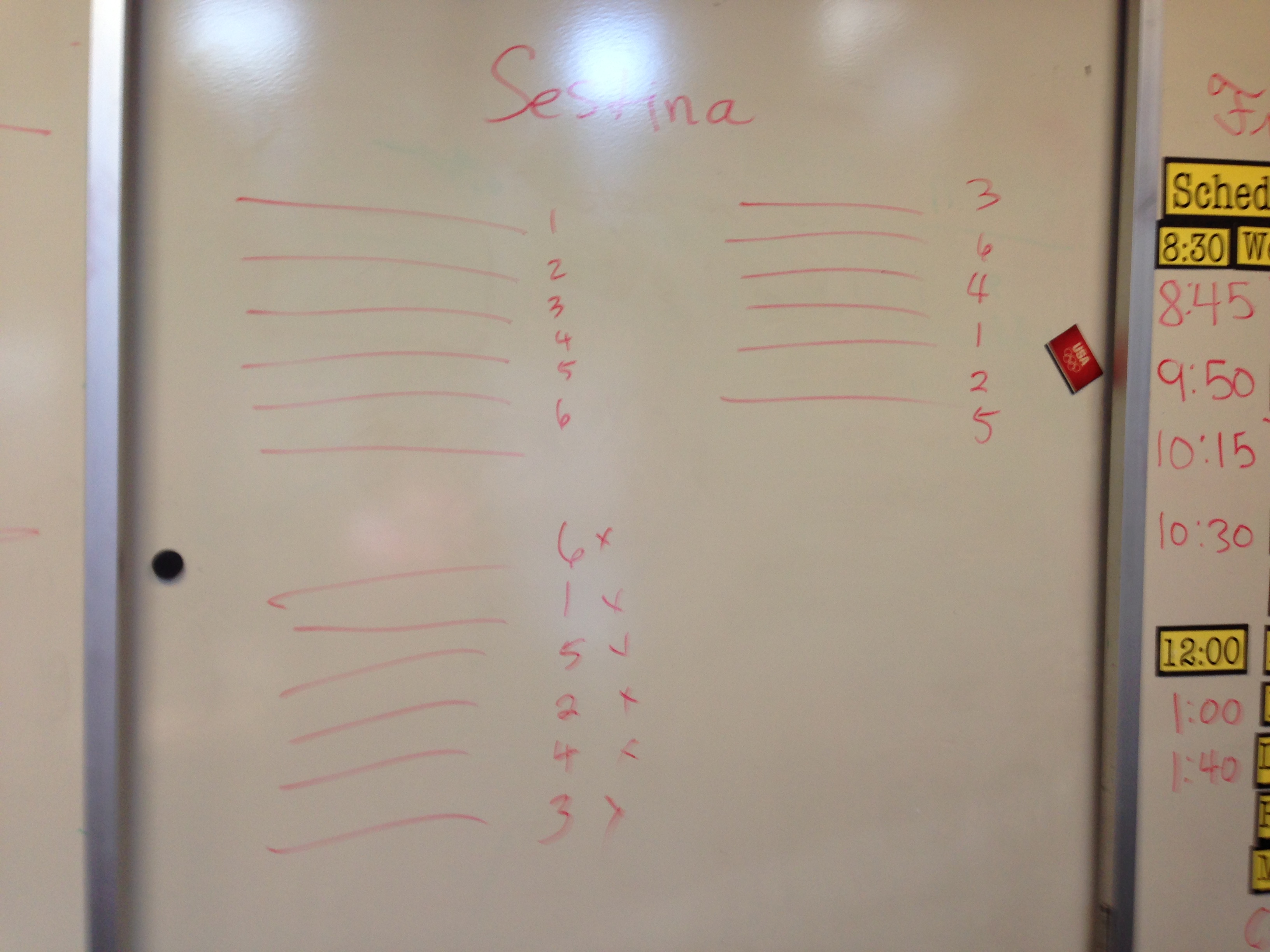
In each class we wrote at least one stanza of a sestina. Here are some photos I took from the whiteboards. I hope to get some of these poems typed up and shared back with the students. I think at least one teacher was going to encourage the students to write the rest of the long sestina poem. Wouldn’t that be grand?
I hope they ask me again next year.
Photos from Silicon Valley Reads Art & Immigration Event
Earlier in March, I had the honor and pleasure of reading with my friends, past and present Poets Laureate in Santa Clara County, and wonderful wonderful teen poets. The students read their poems on the theme of immigration — some of them related their own experiences of home, experiences of their families, or imagined experiences.
I read a poem I wrote years ago, “Samarth’s Mom” — an observation of a young Indian mother with her children at our local elementary school. You can read it at this link, in the online journal Convergence.
Here are some photos from that evening.

The event took place at the lovely Mexican Heritage Plaza in San Jose.

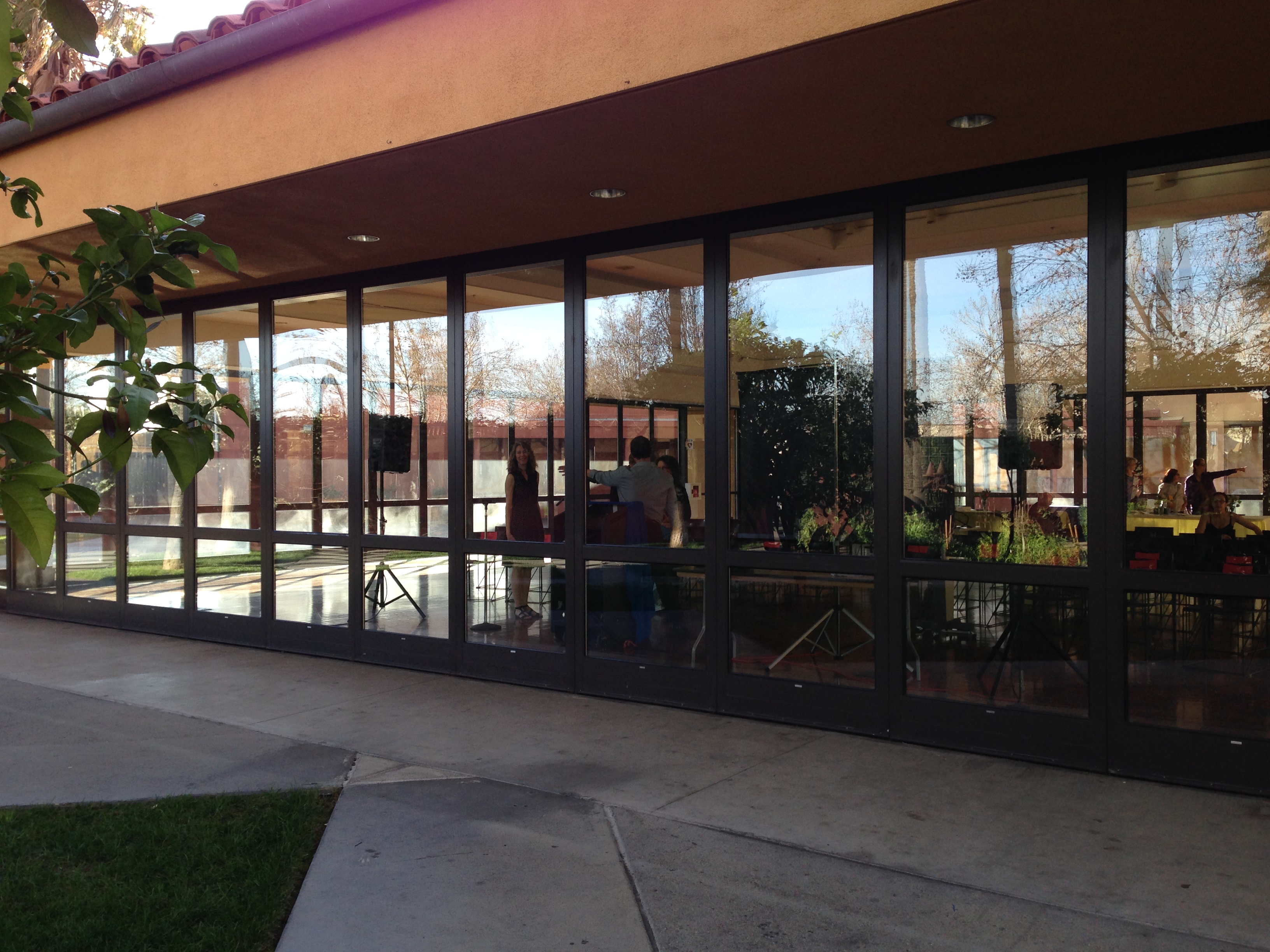
Waiting outside the MHP auditorium. If you look closely, you can see Erica Goss waving from inside the window!

Past Poets Laureate of Santa Clara County, Nils Peterson and Sally Ashton, at their book signing table.

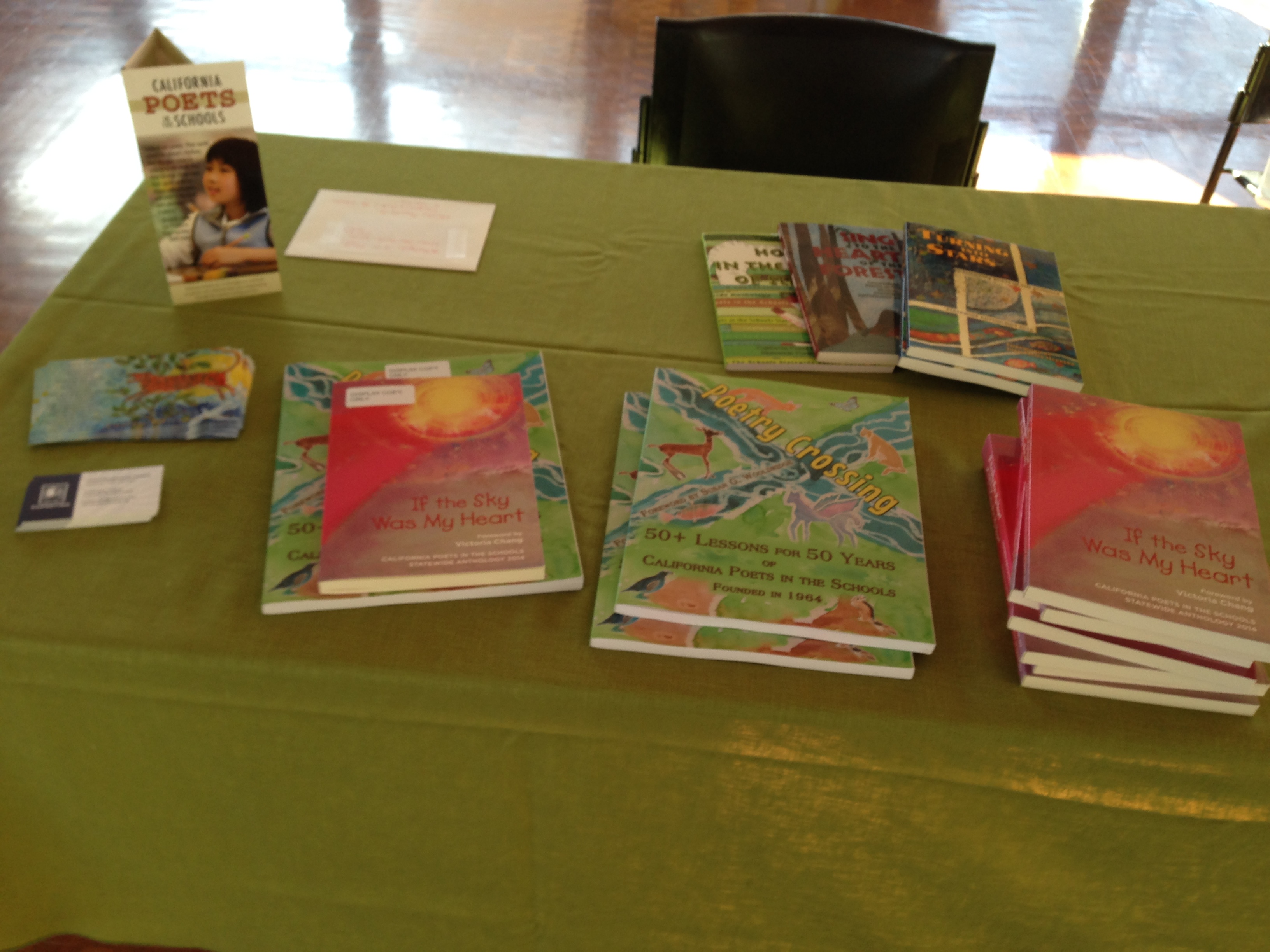
Not having my own poetry books (yet!) I sold anthologies and lesson plan books for California Poets in the Schools.
Side-by-Side Transltions of Rumi
For the Rumi and Hafez reading, I’ll have handouts of three poems by each poet: side-by-side translations into English. I’ll be using A. J. Arberry and Colman Barks for Rumi; Dick Davis and Robert Bly for Hafez. The books from which I’ve selected the poems are identified in my earlier post.
A very good read about the pros and cons of having different translations, read this article, “A Rumi of One’s Own,” at the Poetry Foundation website. Rachel Aviv discusses why some translations might be favored by modern Americans. Provocative.
Here is a selection of other internet resources for Rumi. Whew. It’s amazing.
This blog post offers some great side-by-side translations of some of Rumi’s poems. (There is also a nice selection of translations and context/background information on Rumi and Khayyam elsewhere in the website.)
This Yahoo Group has closed comments, but will still allow you to join over 4000 members to whose commentary you can them have access. Looks pretty intense.
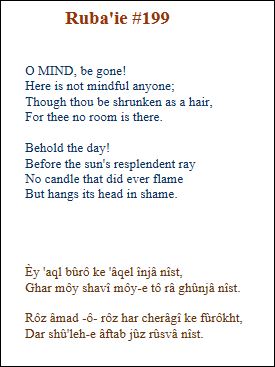
This very cool index of Rumi translators includes only academic translators (does not include Coleman Barks or Robert Bly), but it does contain translations into many languages besides English, as well as a fascinating small selection of A. J. Arberry’s earliest translations (1949) alongside their Persian (Farsi) transliterations. Here’s an example (sorry for the crummy resolution — go to the site and check it out!!):
You can also peruse translations into English together with the Persian (in Arabic script). Here’s an example, again, badly snatched from the website. Translations by Shahriar Shahriari.
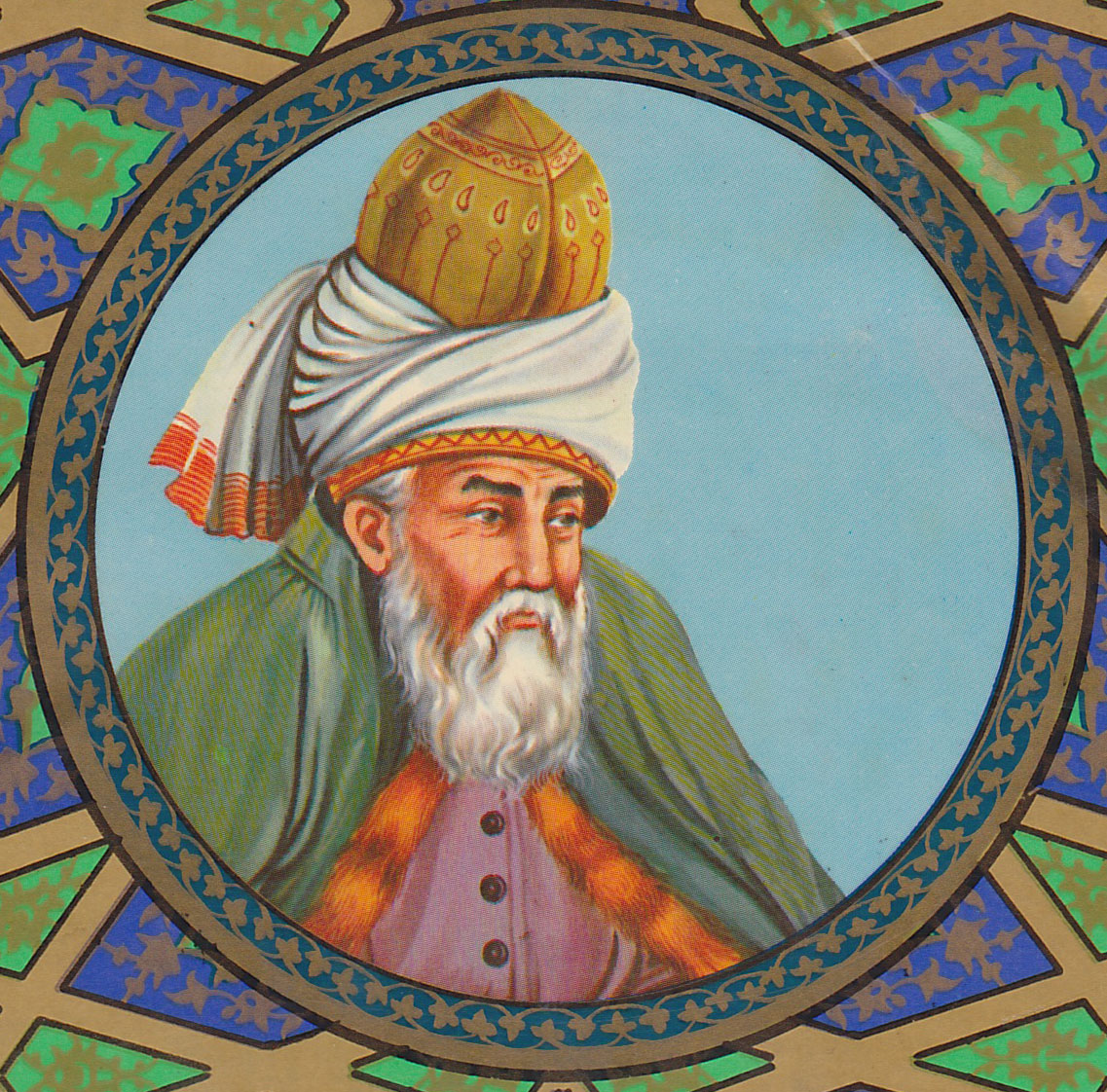
I found the Sufi dance image on several websites, all which attribute it elsewhere, but not to the original. Forgive me.
Persian New Year – Nowruz – Rumi and Hafez Event
Lunar New Year Poem Poster
This is the lovely flyer/poster that Mary Spagnol (flyer maker extraordinaire) created for this year’s Lunar New Year poem, “Cupertino, What is Your Moon? A Lunar New Year Sestina.”
Poetry & The Art of Immigration
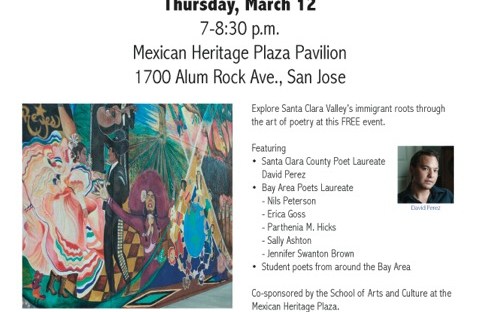
I’m delighted to be participating in this great event with my poets laureate pals: Erica Goss, Parthenia Hicks, David Perez, Sally Ashton and Nils Peterson.
There will be student poems and music, too. Join us!!
Sponsored by many people, as part of the Silicon Valley Reads 2015 program.
Rumi, Hafez and A Lot of Information About Translation
Disclaimer: I do not read Persian, so I can only comment on the English translations and versions of this poetry. I hope to find some friends who can point me toward good videos and audio recordings of these poems in their original language.
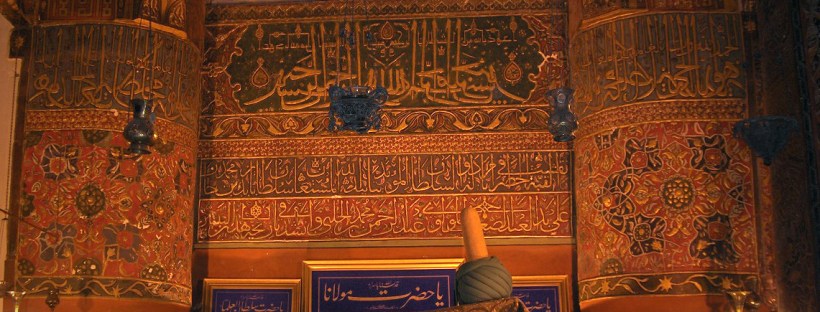
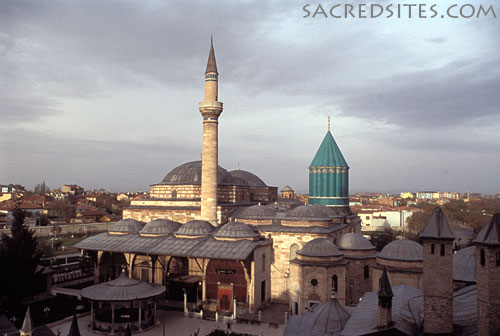
Photo credits: The image above is the inside of Rumi’s shrine, in Koyna Turkey. The image further down is the outside.
By some accounts, Mawlana Jalaluddin Rumi, a great poet who lived in the 13th century, is currently the most popular poet in the United States. (BBC (2104). An Amazon search, admittedly not the most scientific approach, turned up – in descending order – Maya Angelou, Dr. Seuss, Mary Oliver, Edgar Allen Poe, Walt Whitman, Allen Ginsberg, Claudia Rankine, Rumi, Kahil Gibran, and Homer. While I find this a fascinating subject, it’s not the purpose of this post, so I must move on. If you really want the scoop on America’s relationship to poetry, you will enjoy Kate Angus’ post “Americans Love Poetry, But Not Poetry Books” at this link. Heaven help us.
My intention here is to point you toward different translations of Rumi’s poetry. The following is a goodly sample. I also include translations of Hafez, whom we will also read at our Persian New Year event, if we have the time and/or if he is requested.
Translations and Versions
Recommended translation by Franklin D. Lewis.
- Rumi: Swallowing the Sun (poems). At Amazon.
- Rumi – Past and Present, East and West: The Life, Teachings, and Poetry of Jalâl al-Din Rumi (2007) — biography. At Amazon, on GoodReads. Reviewed on JSTOR.
Recommended Translation by A. J. Arberry (1968)
- Mystical Poems of Rumi (new edition with forward by Franklin D. Lewis, 2008. At Amazon.
- More about A. J. Arberry at Wikipedia, including a link to his translation of the Quran.
Robert Bly interviewed by Bill Moyers about Hafez and Rumi, reading his translations of their poems.
Translations by Robert Bly (including Hafez and Rumi )
- The Angels Knocking on the Tavern Door. Thirty Poems of Hafez. (2004) Amazon.
- Poems of Rumi (Translated and Spoken By Robert Bly and Coleman Barks) – audio recording. On iTunes and at Amazon (1989).
Versions by Colman Barks (will be most familiar to anyone who reads Rumi in English)
- The Essential Rumi, New Expanded Edition (2004) on Amazon, on GoodReads
- Rumi: The Book of Love: Poems of Ecstasy and Longing (2003) on Amazon, on GoodReads
- Video of Barks and Bly reading Rumi with musical accompaniment on YouTube
Dick Davis translations of Hafez
- Faces of Love: Hafez and the Poets of Shiraz (2013) at Amazon
- Davis reading his translations of three poems by Jahan Malek Khatun, an Inju Princess, on the News Hour on YouTube.
- NPR interview with Davis about his book (2013)
- Davis’ translation of Hafez’ “For Years My Heart Inquired of Me” at the Poetry Foundation
Analysis and Commentary
If you want analysis on the different translations and versions, an excellent on-line source is the Dar-al-Masnavi, curated by the international Dar-al-Masnavi group.
“The Masnavi is the great masterpiece of Mawlana Jalaluddin Rumi who lived in the 13th century. The Masnavi consists of mainly of sufi teaching stories with profound mystical interpretations. It contains thousands of rhyming couplets (a type of poetry called, in Arabic, “mathnawî”) and is a treasury of religious mysticism of a most sublime quality — which is why it has been so famous and well-loved for so many centuries.”
The site discuss the problems of translating Rumi.
- After more than 700 years, Jalaluddin Rumi might be the most popular poet in the United States. Largely due to US authors, such as the poet Coleman Barks, who has rendered literal translations of Rumi into free verse “American spiritual poetry” in a manner which has reached so many different sectors of American society.
- Unfortunately, this popularization has a real price: the frequent distortion of Rumi’s words and teachings which permeate these well-selling books. The English “creative versions” rarely sound like Rumi to someone who can read the poems in the original Persian, and they are often “shockingly altered.” Few American’s realize this however, believing instead that versions are faithful renderings into English of Rumi’s thoughts and teachings (when they are very often not).
For the original essay on this subject (which I have drastically summarized above) visit the site to read about the popularization in the United States of Rumi’s poetry, and more about the difference between versions and translations. Of special note to anyone interested in the idea of translating poetry (in any language) consider the author’s comments on Ezra Pound’s scholarly translations of Li Po’s Chinese poems and Japanese Noh plays.

Biographies and More Information
Rumi at The Academy of American Poets
Hafez at The Poetry Foundation (also sometimes spelled Hafiz in English)
Robert Bly at The Poetry Foundation
Coleman Barks at The Poetry Foundation
Rabi’a, female Sufi mystic saint and poet, at The Poetry Foundation, at Sufi Poetry (blog)
Persian New Year Poetry Background
As part of my International Poetry Cantos project in 2015, Canto Number 2 is Persian New Year Poetry. Persian New Year is celebrated on March 20, 2015 — the date of the Vernal Equinox.
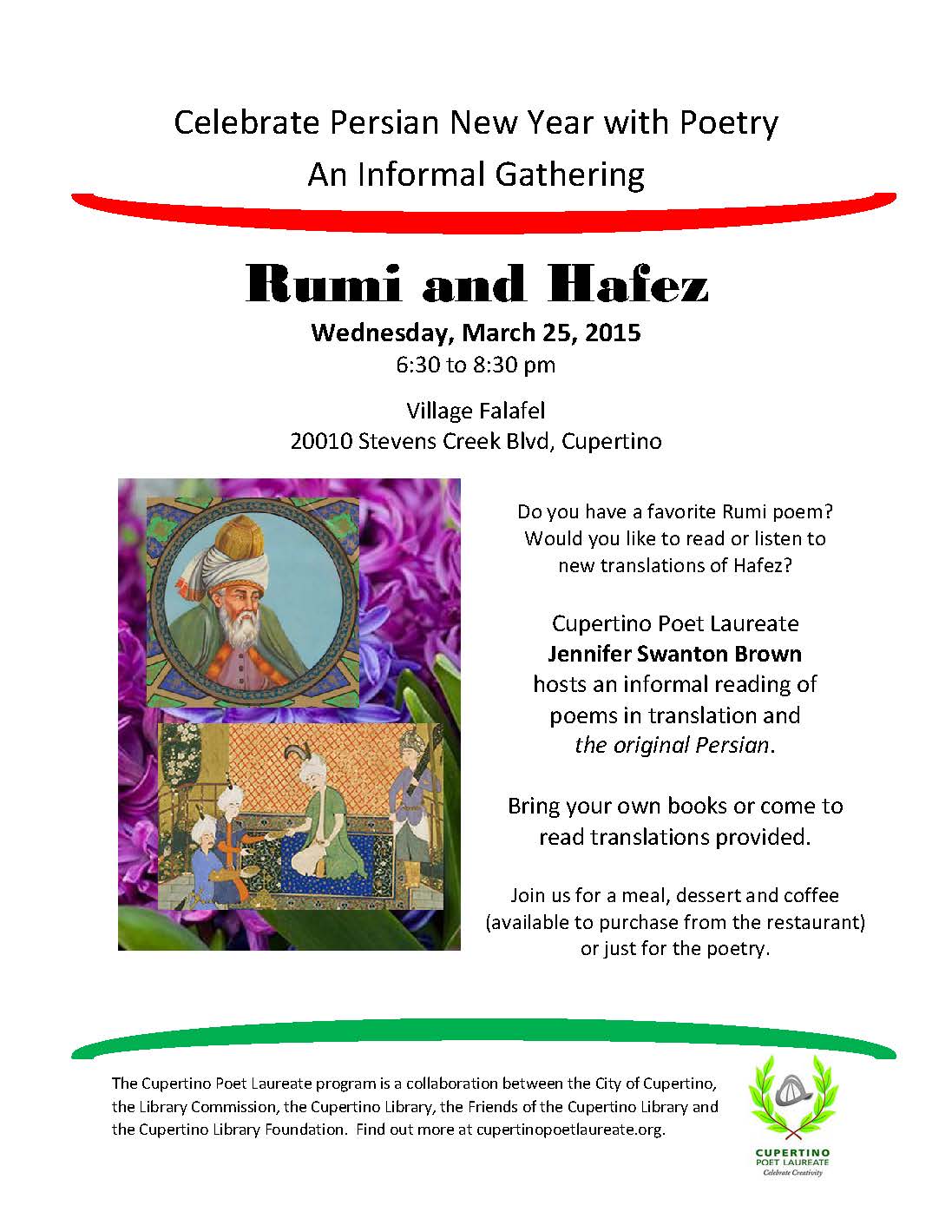
On Wednesday, March 25, please join me in reading poems by Persian poets, in Farsi and in English. We’ll be meeting at Village Falafel, on Stevens Creek Blvd in Cupertino, at 6:30 pm to read poems together and to eat.
To prepare for this event, I want to introduce you to Persian poets of repute, but first a little background. Persian literature is one of the world’s most ancient literatures. You can read about it on Wikipedia for a fast overview, or at the Iran Chamber Society, or Encyclopedia Britannica. Obviously a few websites can’t do justice to this rich tradition, but if you have no familiarity, I suggest spending a few moments to orient yourself.
When we speak of Persian poetry, we mean in general, poetry written in Farsi, also known as Parsi or Persian, or poetry written by people who live in the land currently known as Iran. An interesting source is Classical Persian Poetry: A Thousand Years of the Persian Book, a fascinating look at a Library of Congress exhibit.
The most famous (to Americans) Persian art form is the ghazal, described here by the Academy of American Poets. This link takes you to a lovely example of the form, in English, by poet Agha Shahid Ali on the Poetry Foundation website. Though a Kashmiri Muslim, Ali is well known for writing in this form for American audiences. While I am not an expert, I found this website, with literal and poetic translations of some of Rumi’s famous ghazals to be very enlightening and inspiring.
The most well know Persian poets in the U.S. are Rumi and Hafez. Here are some resources.
- Poetry Foundation video, in collaboration with The News Hour, “Bringing Persian Poetry to Western Readers” about Hafez.
- Hafez biography
- Essay on Rumi, “A Rumi of One’s Own”
- Biographical information about Rumi from Academy of American Poets
There are many books, translations, essays, fantasies about these legendary and vital poets. I’ll be pulling together a bibliography in the next week, getting us ready to read on March 25.
Stay tuned!
Nice Article in Cupertino Courier with Lunar New Year Poem!
Here‘s the online version.
(The PDF link is now gone. Sorry!)
Thank you very much to Matt Wilson, the new editor of the Courier, for running the entire Lunar New Year poem and focusing on poetry in our town.