World Poetry Movement

World Poetry Movement

I was recently asked to help a composer friend locate a “social justice poem” in the public domain for a song he’s been commissioned to write. My internet search located a “Public Domain Poetry” site, but even cooler than that, is this site, “World Poetry Movement” and the long long lists of international poetry festivals and poets who are joined in “poetic action” — for social justice and peace. Amazing really. Pretty good for a Monday!

Poetic action: Any activity designed socially, through the intervention of the poets making contributions with his creative art, from the perspective of audience development at the level of poetry readings and of training activities with the poetic culture. These acts may also be symbolic expressions of solidarity with movements that aim for causes that do benefit planetary life, inclusion, justice and diversity, generating cultural interactions and promoting an aesthetic and ethical sense of existence.

You can download a 21-page PDF “Poetry Planet” magazine, and read poems in Spanish, Farsi, Mayan, and English, and articles about poets from those countries, Israel, Turkey and the Netherlands. It’s a delight.

(Their site seems very slow, so be patient.)

Prompt #20 Introduction to Poetry

Today I was fortunate to teach a poetry class to about 50 cardiovascular nurses, gathered at a local hospital for continuing education. Balancing self-care and caring for others is a continual pursuit for nurses. Because I’m a nurse as well as a poet, I appreciate the reciprocity between the disciplines of practicing art and caring for others. I wasn’t sure how the group would respond to the lesson I had prepared, essentially an expansion of a warm up I use with young students. But they were amazing. I shouldn’t have wasted a moment in worry. We laughed and cried. They wrote and shared. I felt very happy, humbled, exhilarated, blessed. And so grateful.

I started the lesson with this poem, “Introduction to Poetry,” by past U.S. Poet Laureate Billy Collins. I use this poem to reassure novice writers that poetry is not all about academic code-breaking. Analyzing great works of literature is all well and good, don’t get me wrong. I could do it all day long. But most people who want to explore poetry want to read a little, understand what they read, or, if they are mystified, they want that experience to be pleasurable. Even if reading poetry elicits emotions of grief, anger, compassion, the experience should essentially be one of inclusion and communion — not of confusion.

Anyone who is tempted to write poetry wants to feel confident that she has a place at the table. Your poetry can be whatever you want it to be — it’s completely possible to be a good amateur part-time poet. And Billy Collins’ poem suggests a few ways to approach a poem: like an object found in nature — a bee hive; or a fun experience — water skiing; or something beautiful to look at — a color slide of somewhere you traveled; or a game — a maze. Poetry is good. It shouldn’t put us off or frighten us. There are depths and complexities to great poetry, just like there are to great music (jazz or classical), to great art (Rembrandt or Pollack), to great wine. But who can afford to go to the opera or a museum every day, or drink the most expensive wine with every meal? Don’t you like to sing in the shower? Don’t you want a picnic with a cold beer once in a while? I hope more people will start with poems they like, reading alone or in groups, listening, and maybe some day take the plunge and write a little. You don’t have to be a prima ballerina to enjoy dancing at a wedding. You don’t have to understand John Ashbery to have a memorable experience writing a poem.

Your prompt for today is to look around you and find five objects in your every day life — one that you can appreciate with each of your senses. Did you notice how Billy Collins engages a poem with his eyes, his ears, the feeling of water splashing against his skin, the touch of a sensitive nose? Then, simply, write “poetry is…..” with each of those objects. We are used to talking about a beautiful dancer or figure skater as poetry in motion. We are used to calling a rich chocolate dessert poetry on the plate; the master chef can be called a poet in the kitchen. See if you can do it. Let yourself notice that there is poetry all around you at home, at work, in town, on a hike, with your family, in your dreams. Maybe a little mystery will find its way into your poem. Let it in. Maybe a little rhyme or repetition will emerge. That’s fine. Feel the poem in your body, say it out loud, what does that suggest for the poem?

Here’s my example:

Poetry is the rhythmic licking of the cat washing her face. Her spotted paw polishing her pink nose.
Poetry is the dog, in the February sunshine, turning around turning around turning around.
Poetry undulates with the clean sheets, my husband helps me make the bed.
Poetry settles on the windows as darkness settles on Saturday.
Poetry is the clattering fork whisking eggs in a bowl, the smell of my son making his supper, his little hums and yummy murmurs.
Poetry is strong fingers on the keys, typing typing typing, thinking about my mother with every word.
Poetry, a weekend family feeling.

Halloween Poems (in February)

I posted some interesting things on Facebook before this blog was up and running. One was a list of the Halloween Poems that I turned into anti-candy favors for trick-or-treaters who came to my door. This link will take you to the Facebook post where you can see the poems. (You don’t have to use Facebook to read the note.)

I did leave candy, too, with this note. You can’t just leave poems on Halloween. That’s an invitation for a egg to the front door, if I ever heard of one.

IMG_1898

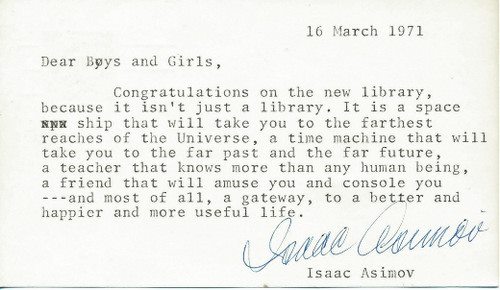
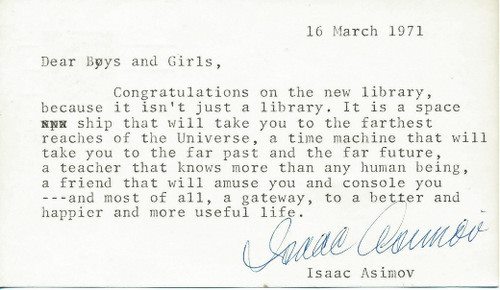
On Libraries – Isaac Asimov

Yes. Libraries are truly magical imaginative scientific spaces. I’m grateful every day for the Cupertino Library and the gift they have given me of Poet Laureateship.

epsilon's avatarCircle and Square

asimov_libraries

View original post

Mango Pudding at Chamber of Commerce Lunch

Mango Pudding at Chamber of Commerce Lunch

This was dessert, mango pudding, at last Friday’s Lunar New Year Luncheon, sponsored by the Cupertino Chamber of Commerce, Asian American Business Council (AABC). This event, the AABC’s 16th annual luncheon, was full of happy noise, good food courtesy of the Dynasty Seafood Restaurant, and many vibrant Cupertino businessmen and women. I wrote a special poem for them to honor the Year of the Horse, and read it together with another poem celebrating horses. It was a “tough crowd” but many listened respectfully and seemed to appreciate the opportunity to hear from the CupPL. I had a blast.

Thanks to Anne Stevenson of the Cupertino Library Commission and the AABC for inviting me. Poems to follow, soon.

Embellish Your Poetry with the Web

This poem, the genesis of which I described in an earlier post, is an example of how to embellish your poetry with “junk and stuff” you can easily find on the internet. Hyperlinks are easy, and while they might take your reader away from your poem temporarily, they might also provide context or audience to a poem that might enjoy a little of both.

Ode to an Oddball Winter

A giant runaway snowball
crashed into a college dorm.
Nothing about this winter
fits the norm.

Floodwaters rise in England
taking lives and homes –
Eliot’s strong brown god
groans.

Drought in California!
Farmers and ranchers fear,
gardeners, fishermen, skiers
stow their gear.

Brutal ice in Georgia
cancels Valentine’s Day.
Power’s out, trees are lost,
skies are gray.

Winter comes to all;
none are spared its pain.
Some will find its beauty
and love again.

Darkness threatens the spirit,
but shivering warms the blood.
Daily the light shines longer on
first bud.

Let’s write a poem for pleasure,
tell a story to coax a smile,
sing a song to offer solace,
survive in style.

If you’re writing a poem to enter in the Cupertino Library’s Silicon Valley Reads Poetry Contest, this is one way to get your poem to speak both on the page and in the techno-sphere.

Another place to explore, if you want ideas for how to combine poetry and other media, I suggest you visit The Poetry Storehouse. They have a host of videos that use poetry and I encourage browsing there. A “remix” I did of Erica Goss’s poem “Afternoon in the Shape of a Pear” is another type of poem + technology fun. I am still drawn more to collage than to video, but the field is wide open. Go for it!

Prompt # 19 Ode For An Odball Winter

Hello poetry friends! Today’s prompt will serve double duty: I want to tempt you to write in one of my favorite forms, the ode, but also I want to create a sample poem on one of the themes for the Silicon Valley Reads Poetry Contest, sponsored by the Cupertino Library. Here goes!

An ode is one of the oldest poetic forms in Western culture. As my friends at the Academy of American Poets describe:

“‘Ode’ comes from the Greek aeidein, meaning to sing or chant, and belongs to the long and varied tradition of lyric poetry. Originally accompanied by music and dance, and later reserved by the Romantic poets to convey their strongest sentiments, the ode can be generalized as a formal address to an event, a person, or a thing not present.”
I love to teach odes, because kids get the idea quickly. We talk about Beethoven’s “Ode to Joy” which many of them have learned to play on their recorders if they are lucky enough to have music in school, and they readily understand praising and celebrating something or somebody. Read a couple of student odes at the CPitS website, in the Youth Poetry section.
Pablo Neruda, one of my favorite poets, wrote many odes (collected in translation and the original Spanish) in Odes to Common Things, common things like onions and chairs. He’s great to teach, too, especially if you have kids in class whose first language is Spanish. Neruda’s odes help dispel the silly idea some of us picked up in English Lit class that odes have to be about urns and dead athletes and other things we don’t care much about anymore. This one, “Ode to a Large Tuna in the Market” will give you a flavor.
pabloneruda
Today I wrote an ode to the oddball winter that is 2013-2014. The idea started when I read a news story about kids at Reed College who crashed a huge snowball (800 lbs) into a dorm wall, damaging it and setting of a viral news story. I didn’t really mean to write a poem with rhyming metered stanzas, but it happened, so I went with it.  (Use a web-based site like RhymeZone if you don’t have a rhyming dictionary.)
My poem (which I’ll publish in a separate post) is also an example of how you can hyperlink images, music, and other information to your poem, if you want to experiment. One of the prompts for the Silicon Valley Reads poetry contest is to “write a poem using technology as part of the process. Use hyperlinks, video, photos or music as part of the poem’s form.” This poem of mine, “Ode to An Oddball Winter” is just such a conglomerate mishmash kind of poem.
Enjoy!

Poets Laureate Discuss and Laugh

Even though there is so much to watch on TV these days, what with the Olympics and Downtown Abby, I am hoping you might have a moment to watch this segment of local Los Gatos (CA) TV. My friend Erica Goss, the current Los Gatos Poet Laureate, has a local show called “Word to Word” about poetry. For her first segment this year, she invited me to be her guest. I was nervous and in need of a better stylist (I had to borrow her lipstick, not having any of my own) but she was gentle and we had a good chat.

I’m on the first 14 minutes, and if you want to skip around you can find me discussing my work with California Poets in the Schools (from about 1:00) or mentioning my awesome Mom (4:39) or my plans for being Cupertino Poet Laureate (5:40). I read three of my poems, starting at around 9:06.

I hope you enjoy whatever portion of this you might watch — I find it very hard to watch myself, but my daughter says I have to get used to it if I’m going to be famous. Argh. Personally, I’d rather watch my 9-month old nephew waddle around the kitchen.

Please feel free to share the link in the interests of spreading poetry all over the place.

Prompt # 18 “Men kill for this” Remembering Maxine Kumin

What a week. Maxine Kumin, a great poet and powerful foremother, died at 88. Iranian poet and activist Hashem Shaabani was executed for his writings. Actor Philip Seymour Hoffman succumbed to his addiction with a lonely needle gesture. I attended a beautiful and moving reading by Louise Glück, who read new poems about the imagined end of a creative life; her reading left me bereft in a way I did not expect. Maybe it’s the rain, which we thirsty Californians revel in, but which greets me in the morning with a darker sky. In any case, I am writing sad stunted miserable poems this week, or, fighting the urge to.

Reading back through Kumin’s poetry, I found a lovely poem that I feel brave enough to offer as a prompt. “Appetite” is a short lyric, less technical than some of Kumin’s work, but still shaped with formal restraint. You can hear Garrison Keillor read it in this 2002 recording of his Writer’s Almanac. Even better, you can hear Kumin read it herself (as part of a delightful lecture/reading) in the (Emily) Dickinson Electronic Archives. She calls it “a little father poem.”  Because it’s reproduced all over the internet, I’ll risk posting it here, without permission.

Appetite

I eat these
wild red raspberries
still warm from the sun
and smelling faintly of jewelweed
in memory of my father

tucking the napkin
under his chin and bending
over an ironstone bowl
of the bright drupelets
awash in cream

my father
with the sigh of a man
who has seen all and been redeemed
said time after time
as he lifted his spoon

men kill for this.

Isn’t it funny how eating reminds us of our family in such powerful ways? I remember my father sitting down at the dinner table every single night to whatever meal my mother put in front of him, lifting his fork and saying, without fail, “This is the best dinner I have ever had.”  That generosity, that gratitude epitomized my father and defines him still for me, if now only in memory.

Your challenge today, your opportunity, is to write about eating with your father. And if that’s a relationship you don’t want to remember or imagine, then pick someone else you ate with regularly, someone whose habits at the dinner table, the picnic table, the lunch counter, the brunch buffet, the bar, are part of your permanent history.

If you can make a connection in your poem between eating and death, I’ll give you extra credit.

Enjoy Maxine Kumin’s poem and think about your delicious short life.

Million-Line Poem, Day 588

This is an awesome project from Tupelo Press, and my couplet has been accepted into their Million-Line Poem (Day 588).

tupelopress's avatarTupelo Press

See the Million-Line Poem in progress here!

Today’s lines of inspiration:

The scurrying mound of skunk, found by swerving lights,
lent his peppery smell to the quick rain. It was a good night.

(Jennifer Swanton Brown, Cupertino, CA)

*
*

If you’re just joining us now, you can read more about the Million-Line Poem and how to participate here

View original post