California Poets in the Schools

I’m going to end National Poetry Month with voices of children. California Poets in the Schools is just one of many organizations nationally that work hard to put working poets into classrooms to encourage the awareness of poetry as an art form and to give voices to children who are otherwise not offered poetry as a creative art. And, though there are others, in my book, CPitS is the only and the best. Full disclosure: I’ve been a poet/teacher with CPitS since 2001, and now serve as both the Area Coordinator for Santa Clara County and as a board member. I love this organization.

Annually CPitS produces an anthology of poetry from all across the state. These poems, from their Facebook page, is indicative of the delicate observation and emotional complexity that children are capable of.

THE SEA

In my mind, there is a sea full of words.
In patches of light green seaweed
words are like seahorses
swaying with the current.

I dive for words like
tuna, octopus, seabass
because they shimmer with color
in the blazing summer sun.

I clean these words and salt them
to preserve them so that later
I can add them to recipes and sentences.

Ethan A., 4th Grade, San Diego
Celia Sigmon, Poet Teacher
Chris Vasquez, Classroom Teacher

POURED FLESH, WITH SILENCE

I never felt like
pouring my flesh
my soul
to hell.
At night
I hear gunshots
get up and run
out to the window
see the smoke. I think
they poured their flesh
to hell. I never hear
silence. Silence is like
an hour glass only
it’s stuck. My heart has
a wish bone in it and
it’s wishing for silence.
One night i got silence
and felt like a butterfly
in spring. The next night
I didn’t hear silence.
I was left in gun smoke, and
in confusion.

by Misty Brown-T, Grade 7, 1993, Oakland
Cassandra Sagan Bell, Poet-Teacher
from the collection *Unborn Dreams* published in the aftermath of the Los Angeles riots (after the Rodney King verdict.)
2014 is the 50th anniversary of our organization. Check out our website and join us: as a teacher, a student, a parent, a donor.
As this is also the closing post on the Cupertino Poetry Exchange for April 2014, I thank you for your attention. Keep writing and reading, keep wondering and asking, keep poetry alive in your life. And drop me a line once in a while!

Los Gatos High School Poets & Larry Levis

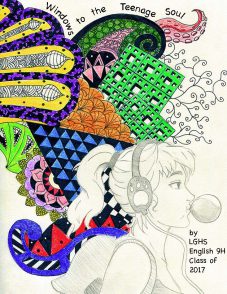
It couldn’t be a more perfect story. “Los Gatos High Freshman English Class Publishes ‘Windows to the Teenage Soul’. The Ebook poetry anthology — possibly the first of its kind for a high school class — is innovative project to help finance 2017 Senior Prom.”

Quoting from Los Gatos Patch: Los Gatos High School English 9 Honors students collaborated with the Los Gatos Library and Smashwords, a distributor of self-published books, to create and publish what they believe to be the first self-produced ebook by a high school class.  Written by more than 120 freshman English students at Los Gatos High, Windows to the Teenage Soul  is an an electronic poetry anthology — an Ebook — available worldwide through Smashwords, on Amazon, Barnes and Nobles, KOBO and Apple’s iBook store. Proceeds from the book’s sales, which begin May 6, will help fund the LGHS Class of 2017’s future events, including senior prom. 

I can’t share a poem from this book (not yet published) but I will share this poem about teenage life and its challenges and dreams.

The Poet at Seventeen

by Larry Levis

My youth? I hear it mostly in the long, volleying
Echoes of billiards in the pool halls where
I spent it all, extravagantly, believing
My delicate touch on a cue would last for years.

Outside the vineyards vanished under rain,
And the trees held still or seemed to hold their breath
When the men I worked with, pruning orchards, sang
Their lost songs: Amapola; La Paloma;

Jalisco, No Te Rajes—the corny tunes
Their sons would just as soon forget, at recess,
Where they lounged apart in small groups of their own.
Still, even when they laughed, they laughed in Spanish.

I hated high school then, & on weekends drove
A tractor through the widowed fields. It was so boring
I memorized poems above the engine’s monotone.
Sometimes whole days slipped past without my noticing,

And birds of all kinds flew in front of me then.
I learned to tell them apart by their empty squabblings,
The slightest change in plumage, or the inflection
Of a call. And why not admit it? I was happy

Then. I believed in no one. I had the kind
Of solitude the world usually allows
Only to kings & criminals who are extinct,
Who disdain this world, & who rot, corrupt & shallow

As fields I disced: I turned up the same gray
Earth for years. Still, the land made a glum raisin
Each autumn, & made that little hell of days—
The vines must have seemed like cages to the Mexicans

Who were paid seven cents a tray for the grapes
They picked. Inside the vines it was hot, & spiders
Strummed their emptiness. Black Widow, Daddy Longlegs.
The vine canes whipped our faces. None of us cared.

And the girls I tried to talk to after class
Sailed by, then each night lay enthroned in my bed,
With nothing on but the jewels of their embarrassment.
Eyes, lips, dreams. No one. The sky & the road.

A life like that? It seemed to go on forever—
Reading poems in school, then driving a stuttering tractor
Warm afternoons, then billiards on blue October
Nights. The thick stars. But mostly now I remember

The trees, wearing their mysterious yellow sullenness
Like party dresses. And parties I didn’t attend.
And then the first ice hung like spider lattices
Or the embroideries of Great Aunt No One,

And then the first dark entering the trees—
And inside, the adults with their cocktails before dinner,
The way they always seemed afraid of something,
And sat so rigidly, although the land was theirs.


James Weldon Johnson’s Lift Ev’ry Voice and Sing and Handel’s Hallelujah Chorus

Time, on the poetry blog, to reflect on the close and loving relationship between song and poetry.

This song, which is not really an Easter song, still always fills my mind’s ear on Easter. James Weldon Johnson wrote the poem, “Lift Every Voice and Sing” on the occasion of Abraham Lincoln’s birthday in 1900. It was set to music composed by his brother, and became immensely popular in the black community, with some calling it the black national anthem. As an influential writer and thinker, and “with his talent for persuading people of differing ideologies to work together for a common goal, Johnson became the national organizer for the National Association for the Advancement of Colored People (NAACP) in 1920.”

liftvoice-isaacsis

Luckily for us, PBS highlights the poem and song on their Black Culture Connection page. On this page, you can listen to a great video describing the conception of the poem, the development of the song, and then a sweet and delicate version of the song, performed by the Isaac Sisters with The Relatives. (There’s also a very trippy hip-hop version in another video,by Doughboy the Midwest Maestro and DJ Kool Rod over a video montage).

Because I am a hopeless poetry researcher, I also found a very interesting lesson on this poem and song created by ARTSEDGE, from the Kennedy Center. Maybe I’ll teach with this the next time I’ve got 5-8th graders.

All that being said, I think my memories of this song stem from singing it in high school, probably in a version that sounded very much like this. (Of course, we sang it not nearly as well, nor with an organ — but with as much gusto as we could muster. And then there’s the whole thing about white middle class kids singing this in the 1970s — but that’s for another to comment on — in fact, read the comments on YouTube. I just love the song and hope you enjoy it.)

And, in case you were hoping for the Hallelujah chorus, here you go! (Mom, this one’s for you!) Happy Easter everyone!

With his talent for persuading people of differing ideologies to work together for a common goal, Johnson became the national organizer for the National Association for the Advancement of Colored People (NAACP) in 1920. – See more at: http://www.poets.org/poet.php/prmPID/72#sthash.P8oiG99M.dpuf

With his talent for persuading people of differing ideologies to work together for a common goal, Johnson became the national organizer for the National Association for the Advancement of Colored People (NAACP) in 1920. – See more at: http://www.poets.org/poet.php/prmPID/72#sthash.P8oiG99M.dpuf

With his talent for persuading people of differing ideologies to work together for a common goal, Johnson became the national organizer for the National Association for the Advancement of Colored People (NAACP) in 1920. – See more at: http://www.poets.org/poet.php/prmPID/72#sthash.P8oiG99M.dpuf

Disobedience by A. A. Milne

For “Throwback Thursday”– and because I love this poem more than almost any other — I present to you, “Disobedience” by A. A. Milne.  My mother claims that I knew this poem by heart before I could read, certainly at two or three years of age. I believe her. It’s a great poem, and one that would appeal immensely to a child. And, most importantly, it sounds good and it’s very fun to read. Try it today! (The poem’s formatting is quirky, and I’m not going to try and fix it here –click through to The Poetry Foundation for a better look.)

Illustrations in the original book, When We Were Very Young, by the incomparable E. H. Shepard. In the illustration above, King John (and the Queen and the Prince) are saying they are very sorry to poor James.

Disobedience

By A. A. Milne

     James James
     Morrison Morrison
     Weatherby George Dupree
     Took great
     Care of his Mother,
     Though he was only three.
     James James
     Said to his Mother,
     “Mother,” he said, said he:
“You must never go down to the end of the town,
     if you don’t go down with me.”
     James James
     Morrison’s Mother
     Put on a golden gown,
     James James
     Morrison’s Mother
     Drove to the end of the town.
     James James
     Morrison’s Mother
     Said to herself, said she:
“I can get right down to the end of the town
     and be back in time for tea.”
     King John
     Put up a notice,
     “LOST or STOLEN or STRAYED!
     JAMES JAMES
     MORRISON’S MOTHER
     SEEMS TO HAVE BEEN MISLAID.
     LAST SEEN
     WANDERING VAGUELY:
     QUITE OF HER OWN ACCORD,
SHE TRIED TO GET DOWN TO THE END
     OF THE TOWN—FORTY SHILLINGS
     REWARD!”
     James James
     Morrison Morrison
     (Commonly known as Jim)
     Told his
     Other relations
     Not to go blaming him.
     James James
     Said to his Mother,
     “Mother,” he said, said he:
“You must never go down to the end of the town
     without consulting me.”
     James James
     Morrison’s mother
     Hasn’t been heard of since.
     King John
     Said he was sorry,
     So did the Queen and Prince.
     King John
     (Somebody told me)
     Said to a man he knew:
“If people go down to the end of the town, well,
     what can anyone do?”
 
    (Now then, very softly)
     J. J.
     M. M.
     W. G. Du P.
     Took great
     C/o his M*****
     Though he was only 3.
     J. J.
     Said to his M*****
     “M*****,” he said, said he:
“You-must-never-go-down-to-the-end-of-the-town-
     if-you-don’t-go-down-with ME!”

A. A. Milne, “Disobedience” from The Complete Poems of Winnie-the-Pooh. Copyright © The Trustees of the Pooh Properties, Curtis Brown Limited, London.

You can see more of my photos from my own books, at A Lane of Yellow (my Poem-A-Day image blog on Tumblr).

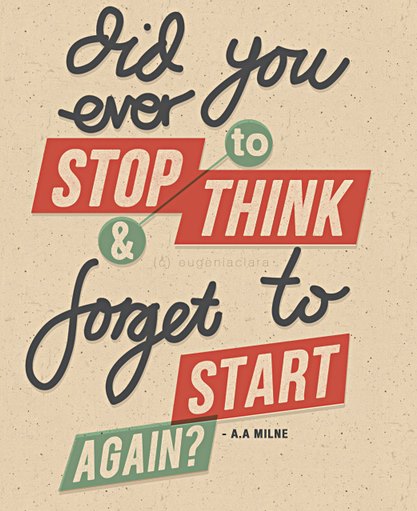
I like this following image, but I can’t confirm that A. A. Milne ever said it. Pooh talks about stopping to think, but not exactly this way. Does anyone know for sure? Of course, a good poem can always help you when you need to stop thinking.

stop to think and forget to start

Baseball Poetry: May Swenson, Marianne Moore and the SF Giants

Happy Giants Home Opener!

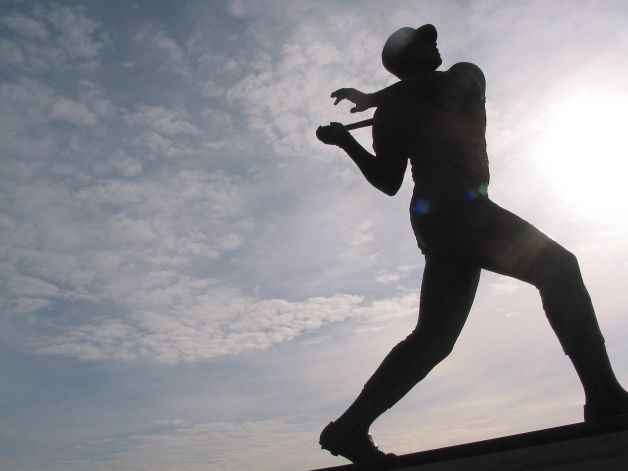
I’m an ardent San Francisco Giants fan. I learned to love baseball as a parent of a Cupertino National Little League player — and now that my son doesn’t play Little League anymore, I’ve transferred that passion to the Giants.

“It’s about
the ball,
the bat,
the mitt,
the bases
and the fans.
It’s done
on a diamond,
and for fun.
It’s about
home, and it’s
about run.”

The first poem I am sharing today is by May Swenson. She’s a favorite poet of mine, because her language is so simple and direct. Nothing too tricky about her poems, yet they still have beauty, depth, and even mystery in them. This poem is called “An Analysis of Baseball” — which, as my smart Monta Vista High School student poets would say, is a a pretty ironic point of view. Be sure to click through the link to see the whole poem in its proper layout.

A longer, more elaborate and especially delightful poem by a famous American woman is “Baseball and Writing” by Marriane Moore. Miss Moore takes much of the language for her poem from sportscasters of her generation. Here’s the second stanza. (The poem reads better on the Poets.org site. Don’t ask me why I can’t get it to reproduce here correctly.) Make sure you read this one out loud.

It's a pitcher's battle all the way--a duel--
a catcher's, as, with cruel
   puma paw, Elston Howard lumbers lightly
      back to plate.  (His spring 
      de-winged a bat swing.)
   They have that killer instinct;
   yet Elston--whose catching
   arm has hurt them all with the bat--
	when questioned, says, unenviously,
   "I'm very satisfied.  We won."
	Shorn of the batting crown, says, "We";
	robbed by a technicality.
Fanaticism?  No.  Writing is exciting
and baseball is like writing.
   You can never tell with either
      how it will go
      or what you will do;
   generating excitement--
   a fever in the victim--
   pitcher, catcher, fielder, batter.
	Victim in what category?
Owlman watching from the press box?
	To whom does it apply?
	Who is excited?  Might it be I?

– See more at: http://www.poets.org/viewmedia.php/prmMID/15658#sthash.AL4Vl3yT.dpuf

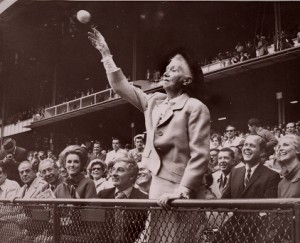
The photo at the top of this post is of Miss Moore throwing out the first pitch in Yankee Stadium in 1968.

There are a lot of baseball poems. A lot. I’m not sure what it is about poets, but baseball seems to be their sport. I wrote a poem for my daughter’s softball team which was published in a local journal, The Sand Hill Review, and one for my son’s baseball team which was included in the 2008 California Poets in the Schools statewide anthology.

I also noticed this poem — “Poem for Giants,” by Matthew Zapruder — on SFGate’s website, a few days ago.  It takes you on a bit of a journey, but a good poem will do that.

mccovey

Go Giants!

“The Owl & the Pussycat” by Edward Lear

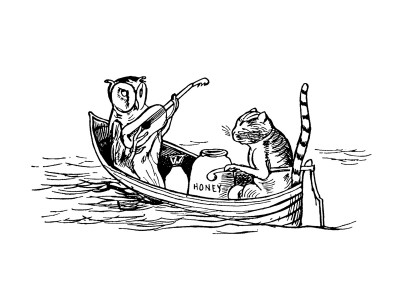
I’m feeling light-hearted today, desirous of rhyme and rhythm. This poem is such a delight and one that I suspect doesn’t get the respect it deserves. Make sure you read it out loud, at least to yourself, preferably to a small person while the TV is off. (If you click through to the Poetry Foundation or Poets.org sites, you can see it formatted correctly.)

The Owl and the Pussy-Cat

  by Edward Lear

The Owl and the Pussy-Cat went to sea
In a beautiful pea-green boat:
They took some honey, and plenty of money
Wrapped up in a five-pound note.
The Owl looked up to the stars above,
And sang to a small guitar,
“O lovely Pussy, O Pussy, my love,
What a beautiful Pussy you are,
You are,
You are!
What a beautiful Pussy you are!”

Pussy said to the Owl, “You elegant fowl,
How charmingly sweet you sing!
Oh! let us be married; too long we have tarried,
But what shall we do for a ring?”
They sailed away, for a year and a day,
To the land where the bong-tree grows;
And there in a wood a Piggy-wig stood,
With a ring at the end of his nose,
His nose,
His nose,
With a ring at the end of his nose.

“Dear Pig, are you willing to sell for one shilling
Your ring?” Said the Piggy, “I will.”
So they took it away, and were married next day
By the turkey who lives on the hill.
They dined on mince and slices of quince,
Which they ate with a runcible spoon;
And hand in hand, on the edge of the sand,
They danced by the light of the moon,
The moon,
The moon,
They danced by the light of the moon.

For a deeper dive into the value of this poem, enjoy this article by David Orr, in which he describes helping his father recover from a stroke by using poetry. “Orr’s father tells him, “I really like the runcible spoon,” and that’s close enough to love for me. “

Lucille Clifton Reads “homage to my hips”

I’ve recently been teaching about poetry (stewarding young poets to write their own poems) in Fremont California at Gomes Elementary School. This experience was brought to me and all the kids at Gomes courtesy of their PTA and California Poets in the Schools. For my part, I had 120 fourth graders. It was grueling, but every minute I would do again.

One lesson we do I call “Simile and Your Body.” I start with “A Birthday” by Christina Rossetti, which I shared earlier this week, discussing how a body part can have feelings. Then we talk about all the parts of our bodies we can write about (brains, fingers, bones, feet, faces, elbows). Then we read “homage to my hips” by Lucille Clifton. This poem makes it safe to start a discussion abut the parts of our bodies that sometimes get laughed at, that we might be embarrassed about: our too big teeth or noses, our “fat” stomachs, our ears that stick out, our skin that’s not a color we see on T.V. very often. Our eyes that need glasses. Our legs that need wheelchairs. Pride in our bodies can go hand in hand with confusion, anger, joy. It’s also useful to give kids an example of a “real” poem that doesn’t conform orthographically to what they’re learning in school.

There is so much on Facebook and in my email Inbox right now about poetry. I wish it were always this way (except I would probably fall over from exhaustion). This video appeared like a lucky charm in my News Feed today. Enjoy Ms. Clifton performing it, and read it for yourself at this link.

homage to my hips
By Lucille Clifton

these hips are big hips
they need space to
move around in.
they don’t fit into little
petty places. these hips
are free hips.
they don’t like to be held back.
these hips have never been enslaved,
they go where they want to go
they do what they want to do.
these hips are mighty hips.
these hips are magic hips.
i have known them
to put a spell on a man and
spin him like a top!

Christina Rossetti “A Birthday”

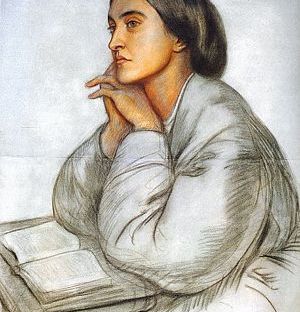
For the second day of National Poetry Month, I offer one of my all time favorite poems, “A Birthday” by English poet, Christina Rossetti.

A Birthday
By Christina Rossetti

My heart is like a singing bird
Whose nest is in a water’d shoot;
My heart is like an apple-tree
Whose boughs are bent with thickset fruit;
My heart is like a rainbow shell
That paddles in a halcyon sea;
My heart is gladder than all these
Because my love is come to me.

Raise me a dais of silk and down;
Hang it with vair and purple dyes;
Carve it in doves and pomegranates,
And peacocks with a hundred eyes;
Work it in gold and silver grapes,
In leaves and silver fleurs-de-lys;
Because the birthday of my life
Is come, my love is come to me.

I often teach with this poem, because I know it by heart and love to look at the faces of young students when I’m reciting it for them. Nothing commands their attention better than a poem read from memory, a true performance. There are also so many visual images, and some strange and bizarre words that make us laugh (click through “vair” to see what I mean, poor Sciurus vulgaris).  The poem lends itself to fruitful discussions of simile and metaphor, and is a convenient opening for a lesson about how our bodies have feelings that our minds sometimes are afraid to articulate.

Drop me a comment about this poem, or share one of your own.

314px-Geoffrey_of_Anjou_Monument with vair lined mantle

Enamel effigy of Geoffrey Plantagenet, Count of Anjou on his tomb at Le Mans Cathedral, wearing a vair-lined mantel.


Poetry Contest Winners

Poetry Contest Winners

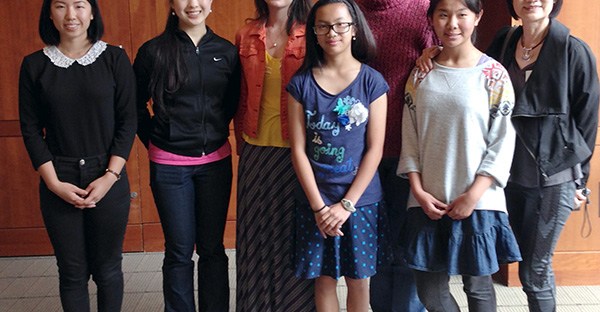
Read here about the winners of the poetry (and essay) contest sponsored by the Cupertino Library Foundation as part of 2014’s Silicon Valley Reads project. You can click on the names of the winners to read their work. We write some fine poems in Cupertino! Special thanks to Stephanie Pressman and Amanda Williamsen for helping me judge.

Adult Category

First Prize Winner: Kim Johnson

essay-winner-first-place

Teen Category

First Prize Winner: Annabelle Tseng

Second Place: Angela Wang

Middle School Category

First Prize Winner: Hope Nguyen

Second Place: Jacqueline He

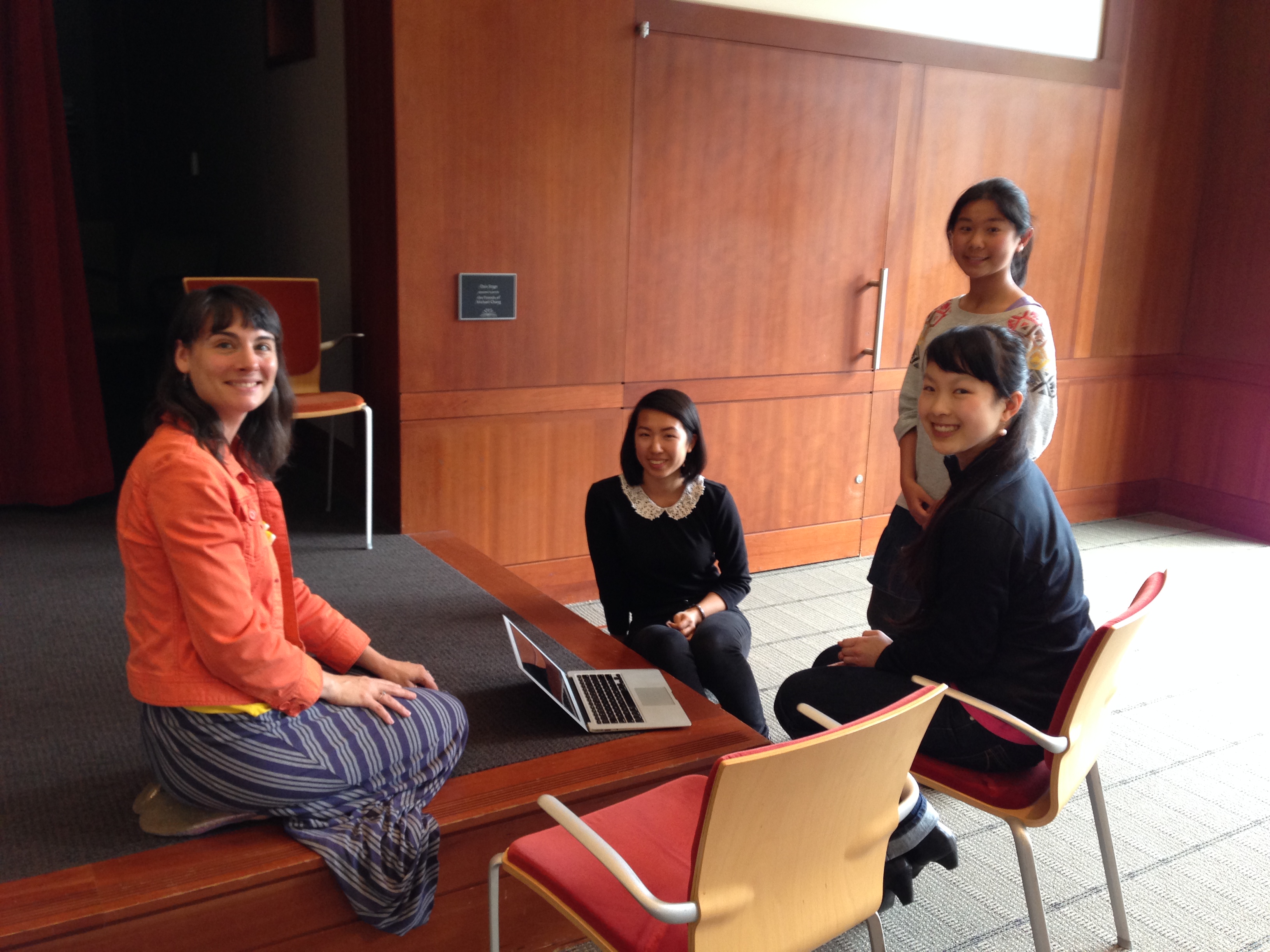
Here’s Amanda chatting with a couple of the winners after the event.

amanda chatting wtih winners

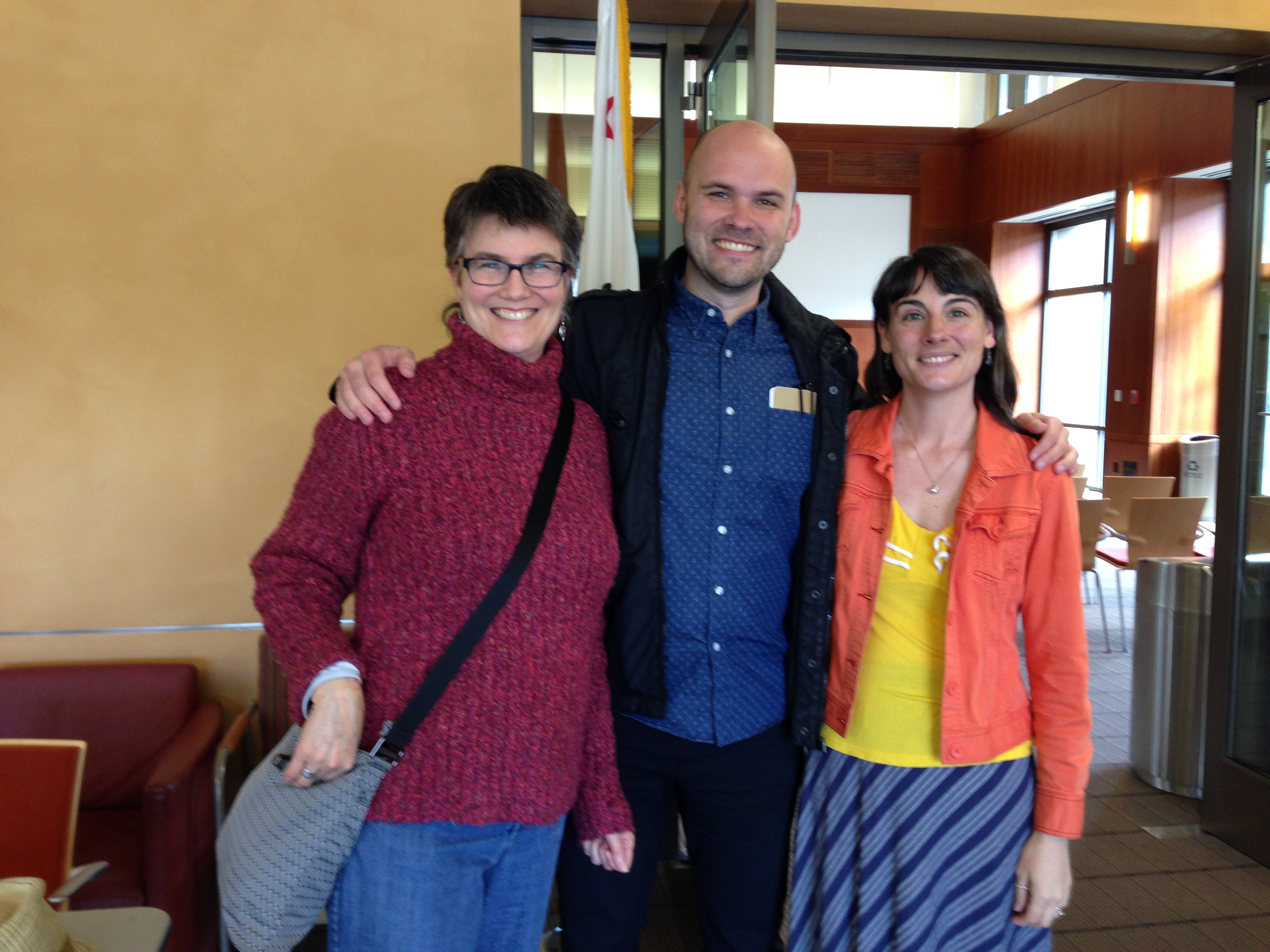
And this is Amanda and I with Robin Sloan, the author of Mr. Penumbra’s 24-Hour Bookstore, one of the books featured during Silicon Valley Reads this year.

jsb robin and amanda

Winners of Silicon Valley Reads poetry contest to be announced today

Winners of Silicon Valley Reads to be announced today

In addition to both authors returning to Silicon Valley to talk with De Anza College President Brian Murphy, the 1:30 p.m. program will include the announcement of the winners of the Cupertino Library Foundation’s essay and poetry contests. Forty-three adults and teens entered the essay contest, which was the most entries in the contest’s six years, and there were 50 entries for the first year of the poetry contest.

Join me there to greet the poetry contest winners.