Flash Fiction Forum

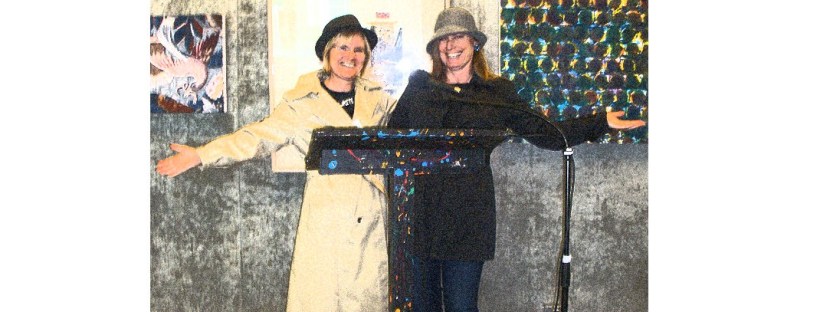
Tania Martin and L.A. Kurth are “Flash Fiction Forum” and I’m honored to have been chosen to read with them and among the following local talent on October 8, 2014.

  • Dallas Woodburn
  • Liz Nguyen
  • Carol Park
  • Trent Dozier
  • Noorulain Noor
  • Kevin Sharp
  • Nils Petersen, first Santa Clara County Poet Laureate,
  • Allison Landa
  • Renée M. Schell
  • Kirstin Chen

Join us at 7 pm, WORKS Gallery, 365 South Market Street, San José CA (Market St. at the edge of San José Convention Center).

Prompt #42 Poets, Food, Limes, Love and Death

Food makes regular appearances in poetry: appetites, hunger, desire, love, family, togetherness, physical senses, the body, color, flavor and scent. It’s not surprising that poets, who famously attend to the textures of the world, would use food metaphors and write whole poems in honor of the senses that we savor.

Some of the most famous poems to food include the following:

  • Pablo Neruda’s odes — including these two, among my favorites — “Ode to A Large Tuna in the Market” and “Ode to the Orange.” (If you want a real treat, check out this amazing food and poetry blog, Eat This Poem, for recipes and poetry. What did I tell you about this relationships between eating and poets?) (Neruda is so beloved, his poetry is everywhere. Check out this blog where “Ode to the Onion” is translated into many languages!)
  • Gary Soto’s “Oranges” which from this link can be printed onto handouts to use in a classroom!
  • Giggle Poetry has a whole page of silly food poems, ready to tickle kids.
  • Food poetry is often nostalgic, as in Amy Gerstler’s “Fruit Cocktail in Light Syrup.
  • The Academy of American Poets has a great list of books with food and poems.
  • Even the important and creepy Emily Dickinson uses food imagery. “Fame is a Fickle Food” is a scary poem and should be a lesson to us all!
  • And what about Kay Ryan’s “Lime Light” which is a modern (and slightly less creepy, more compassionate version of ED’s poem)??

I think you get the idea.

Perhaps my favorite use of food in poetry is, however, not silly, or even in a poem about food. When Donald Hall‘s wife and fellow poet, Jane Kenyon, died, he wrote an astonishing book called Without. The poem at the center of this bleak, grim, grief-struck book — which marks the turn towards poems that begin to think about the possibility of healing — is a poem called, “Without.” Fortunately, you can click through and read it for yourself. The reason I thought of it for this post, is because the last word in the poem is “garlic” — a word that hangs at the end of the last stanza — a potent, flavorful, sharp universal food at the end of a poem that can’t possibly end. How can a husband ever finish a poem that describes all the things he is forever without, now that his wife has died? There are other food words in the poem, many sensual and intellectual images, but to end with garlic seems so wrong, so painful, so impossible. It’s a remarkable poem and I hope you’ll take the time to read it. I have never forgotten it, or how strange and perfect that one food image resonates with the universal experiences of love and great loss.

So, your challenge, today, this week, is to write a food poem! I had the delightful experience today of reading at Erica Goss‘s Poetry Kitchen, a new series she is hosting at the Los Gatos Library. I read several food poems that I’ve written. I’ll write a new one, too, if you will.

(Onion illustration source here.)

Poem for the Cupertino Fall Festival “In A Dry Time”

Yesterday I was fortunate and honored to read a new poem, written for the occasion, at the Silicon Valley Fall Festival, held in the beautiful Memorial Park in Cupertino. Read more about the festival sponsors and events here. I was invited to read through my connections with the Cupertino Library Foundation and the Rotary Club. It was a  super event; I particularly enjoyed the high school art show and the robotics teams. I even bought a Christmas present for my sister-in-law at one of the booths. I had a lovely chat with

My dear friend Alice came to listen, and made a video with her phone, which you can view here on Flickr. The first line of the poem is missing from the video. That’s sometimes the way with technology, even here in Silicon Valley. There might be professional photos and video later, but for now, it’s a couple of us neighborhood amateurs.

(9/18/14 click through here for many photos from the great event.)

img_1967

For those who weren’t in attendance, and for the couple of you I saw at the event and to whom I promised I would post, here’s the poem. I hope you enjoy it.

In A Dry Time

September in California is a dry time.
Have you seen the madrone bark curl?
Have you seen the mountain lion on the trail?
Do not fear.

September in California is a new year.
Have you seen school children with backpacks thumping,
their bicycle helmets beaded with morning fog?

September in California is still a flowering time.
You have seen the pink and white oleander blossoms winking
between dark green, dusty branches, heavy
along the highway, waving as you drive by golden hills.

Soon the dark and wet will find us.
Already the first Liquid Amber leaves are turning red.
Have you seen them still high in the trees?

We are September in California together,
in festivals, in flea markets and garage sales.
We will walk the booths looking for a silver pin,
a ruffled scarf, a book.
We will finger the red, green and purple bounty,
the tomatoes, the long beans, the okra on the farmers’ tables.
September in California is feast time.

Have you seen the moon as orange as a mango?

September in California is a waiting time.
Have you felt it, standing on-line for coffee, crossing the street
with your company badge banging gently against your hip?
Have you felt the changing angle of the sun,
the hot wind in the afternoon,
the air thick with that singed grass smell and car exhaust?

Soon enough the rain will come, but for now,
September waits with you.
September in California is a dry time,
but bright with glare glancing off the final days of summer.
Raise your hand, shield your eyes, we have a few more days.

for September 13, 2014
Cupertino’s Silicon Valley Fall Festival

(c) Jennifer Swanton Brown

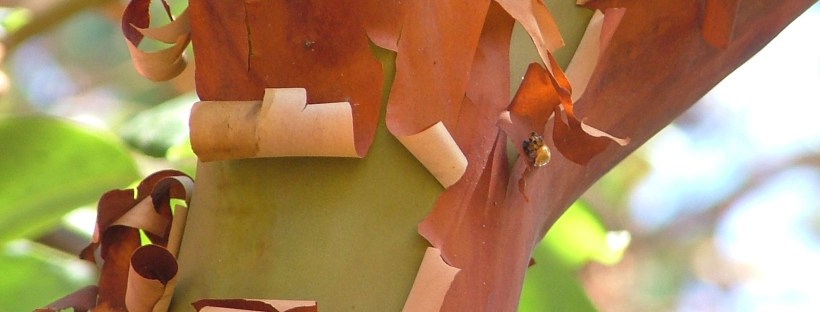
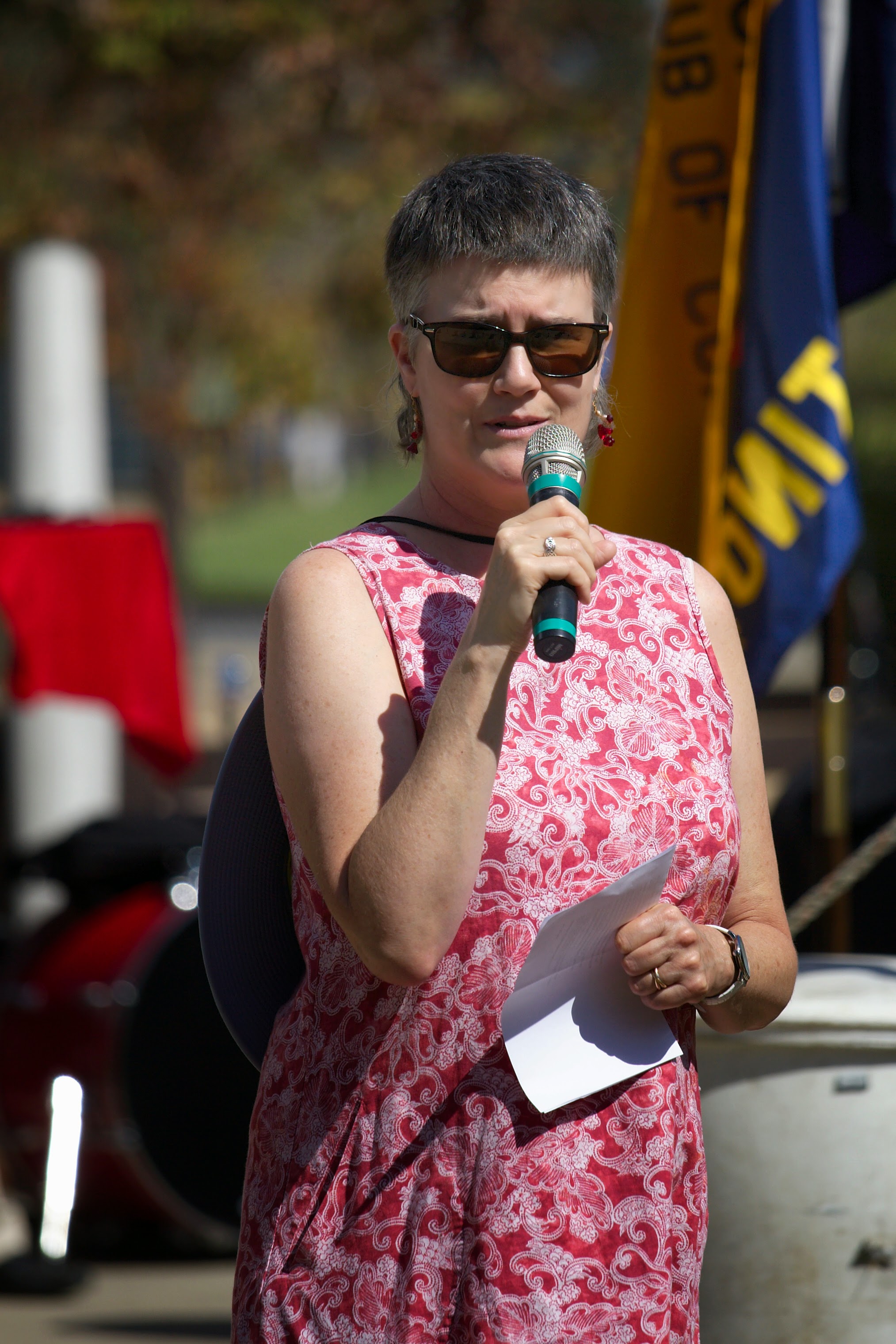
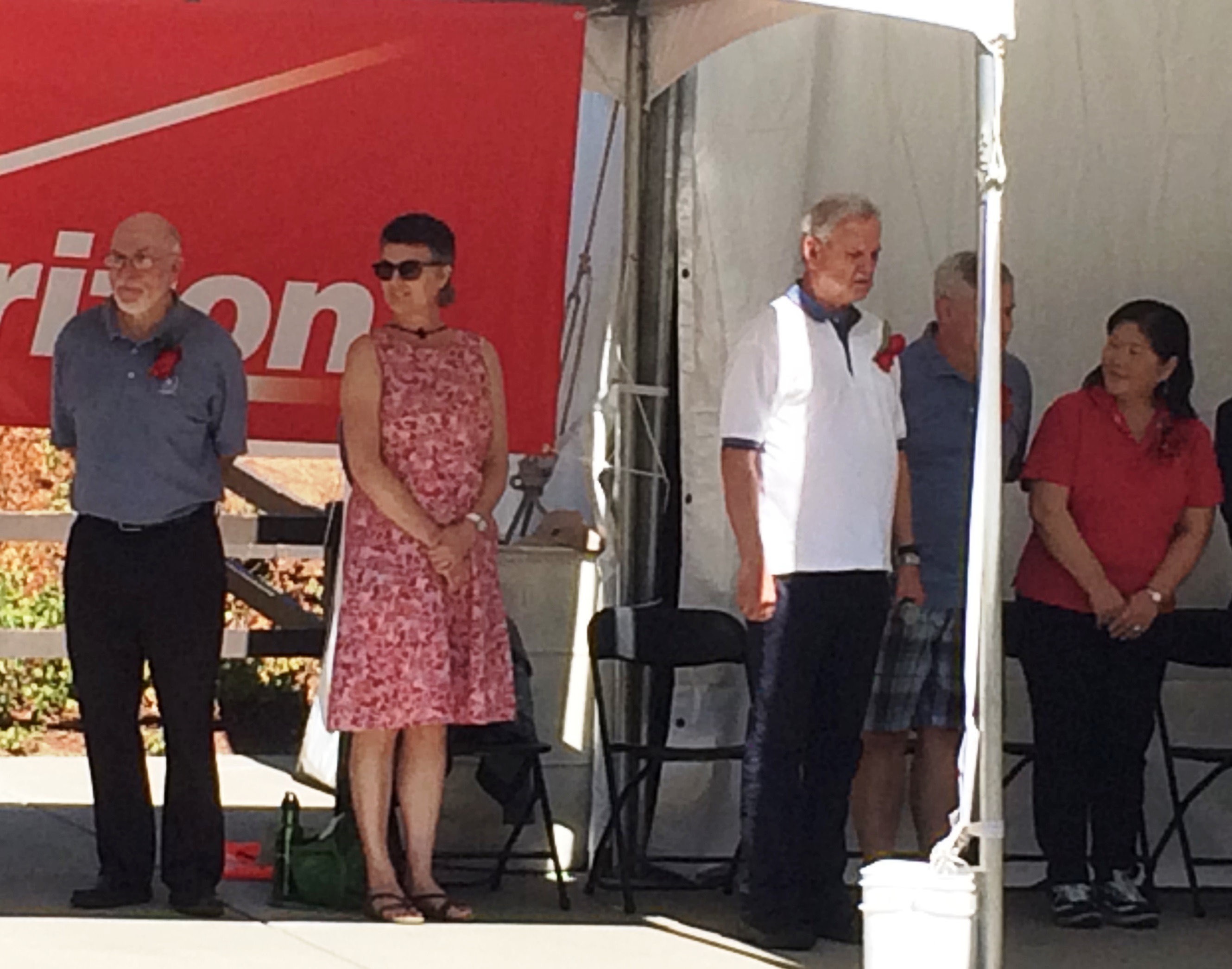
(The photo above is of a madrone tree, with its characteristic red bark curling over green wood. The photos below are of the event. It was sure a sunny day!)

jennifer emoting her poem adj jennifer with dignitaries adj

Unsung Holidays : Poetry Reading Series in Cupertino

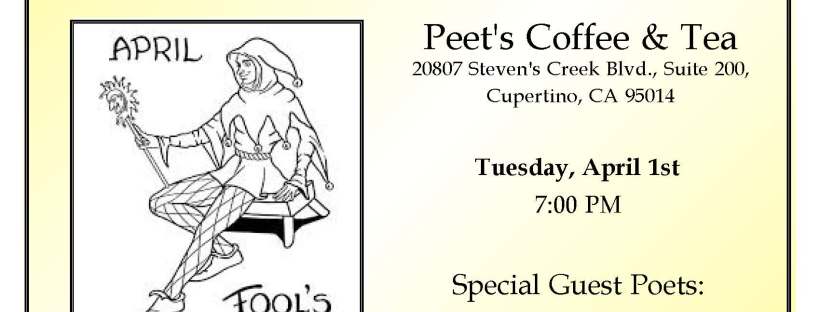
This coming Tuesday, April 1, will be the first of a series of poetry readings I’m hosting in Cupertino. Join the event on Facebook. Or just show up and have a cuppa with us at Peet’s. Guest poets will be Stephanie Pressman and Amanda Williamsen.

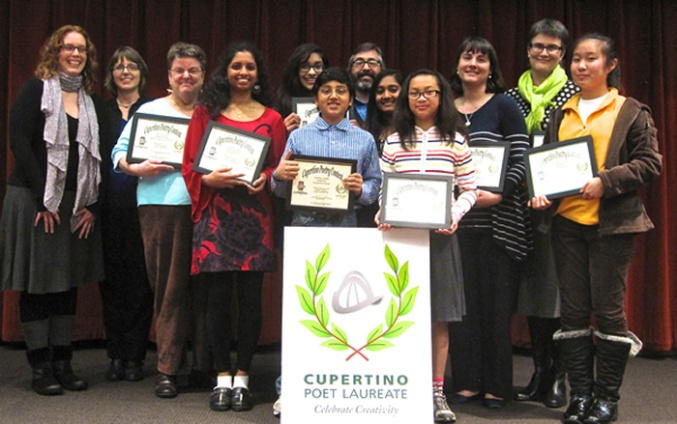
You may remember Stephanie and Amanda, as they were the first and second place winners in last year’s Cupertino Poetry Contest, sponsored by Dave Denny, the first CupPL. Read about that event and remember here.

ShowImage.aspx

Stephanie is third from the left. Amanda is third from the right. I’m the tall one in the green scarf. We had fun that evening. That’s Dave in the middle with the glasses and handsome beard.

Prompt #25 Ekphrasis : Poetry Confronting Art

I love ekphrasis. I love saying it, and I love writing ekphrastic poems. Simply put, ekphrasis is the the process of writing about a piece of visual art: a dramatic or poetic response to a painting or sculpture. I like the way the Academy of American Poetry discusses the process: as confrontation. Poetry confronting art. If you click through to their site, you can read all about the history of the form (back to Homer) and check out over a dozen examples.

The following ekphrastic poem will appeal (hopefully) to everyone: “Stealing The Scream,” by Monica Youn. The painting is so famous it has become a pop culture icon — The Scream, by Edvard Munch. There are several versions of the painting (lithographic prints) and, as Wikipedia, explains, “The Scream has been the target of several high-profile art thefts. In 1994, the version in the National Gallery was stolen. It was recovered several months later.” Monica Youn’s poem contemplates the irony of something actually happening to the painting — and to the people involved in the theft and its alarming discovery — as being suddenly worthy of the horrified check-slapping image we all know so well.

Stealing The Scream
by Monica Youn

It was hardly a high-tech operation, stealing The Scream.
That we know for certain, and what was left behind–
a store-bought ladder, a broken window,
and fifty-one seconds of videotape, abstract as an overture.

And the rest? We don’t know. But we can envision
moonlight coming in through the broken window,
casting a bright shape over everything–the paintings,
the floor tiles, the velvet ropes: a single, sharp-edged pattern;

the figure’s fixed hysteria rendered suddenly ironic
by the fact of something happening; houses
clapping a thousand shingle hands to shocked cheeks
along the road from Oslo to Asgardstrand;

the guards rushing in–too late!–greeted only
by the gap-toothed smirk of the museum walls;
and dangling from the picture wire like a baited hook,
a postcard: “Thanks for the poor security.”

The policemen, lost as tourists, stand whispering
in the galleries: “. . .but what does it all mean?”
Someone has the answers, someone who, grasping the frame,
saw his sun-red face reflected in that familiar boiling sky.

Isn’t that fabulous? Your challenge today, is to write an ekphrastic poem. If you’re not at a museum, look up art on the internet or open a book. I’m going to be writing an ekphrastic poem based on an art exhibit “Initial Public Offering” I visited yesterday at the San Jose Museum of Art. It’s a special poem for a special event, coming up April 17. Come back and read the poem later this month. Now, get writing!


Stealing The Scream

by Monica Youn

It was hardly a high-tech operation, stealing The Scream.
That we know for certain, and what was left behind--
a store-bought ladder, a broken window,
and fifty-one seconds of videotape, abstract as an overture.

And the rest? We don't know. But we can envision
moonlight coming in through the broken window,
casting a bright shape over everything--the paintings,
the floor tiles, the velvet ropes: a single, sharp-edged pattern;

the figure's fixed hysteria rendered suddenly ironic
by the fact of something happening; houses
clapping a thousand shingle hands to shocked cheeks
along the road from Oslo to Asgardstrand;

the guards rushing in--too late!--greeted only
by the gap-toothed smirk of the museum walls;
and dangling from the picture wire like a baited hook,
a postcard: "Thanks for the poor security."

The policemen, lost as tourists, stand whispering
in the galleries: ". . .but what does it all mean?"
Someone has the answers, someone who, grasping the frame,
saw his sun-red face reflected in that familiar boiling sky.

– See more at: http://www.poets.org/viewmedia.php/prmMID/16477#sthash.qS5hIPDk.dpuf

Stealing The Scream

by Monica Youn

It was hardly a high-tech operation, stealing The Scream.
That we know for certain, and what was left behind--
a store-bought ladder, a broken window,
and fifty-one seconds of videotape, abstract as an overture.

And the rest? We don't know. But we can envision
moonlight coming in through the broken window,
casting a bright shape over everything--the paintings,
the floor tiles, the velvet ropes: a single, sharp-edged pattern;

the figure's fixed hysteria rendered suddenly ironic
by the fact of something happening; houses
clapping a thousand shingle hands to shocked cheeks
along the road from Oslo to Asgardstrand;

the guards rushing in--too late!--greeted only
by the gap-toothed smirk of the museum walls;
and dangling from the picture wire like a baited hook,
a postcard: "Thanks for the poor security."

The policemen, lost as tourists, stand whispering
in the galleries: ". . .but what does it all mean?"
Someone has the answers, someone who, grasping the frame,
saw his sun-red face reflected in that familiar boiling sky.

– See more at: http://www.poets.org/viewmedia.php/prmMID/16477#sthash.qS5hIPDk.dpuf
the figure’s fixed hysteria rendered suddenly ironic by the fact of something happening; – See more at: http://www.poets.org/viewmedia.php/prmMID/16477#sthash.qS5hIPDk.dpuf

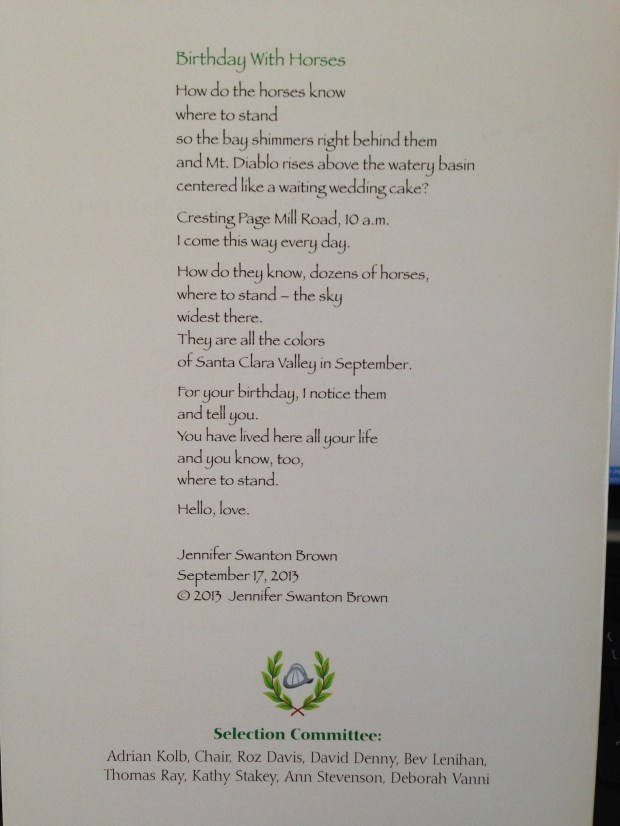
“Birthday With Horses”

This poem was written for my husband. I first read it at the September 17, 2013 Cupertino City Council meeting when I was officially appointed to the post of Cupertino’s second Poet Laureate. This is how it appeared on the back page of the program to my “Welcome Ceremony” on November 10, 2013.

Lunar New Year Poem “Prayer for the Year of the Horse”

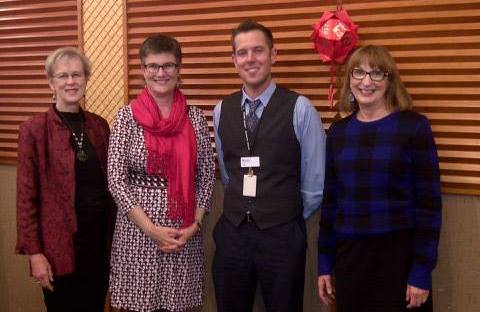
This is the poem I wrote for the Cupertino Chamber of Commerce Asian American Business Council’s annual Lunar New Year luncheon. I was born in the year of the rat, and while doing my research for this poem, discovered that I share that Chinese Zodiac sign with President Noynoy Aquino of the Philippines. I understood from my research that 1960 was a “metal” year, making me a “metal rat.” However, I met a lovely woman at the luncheon, Mei Huey Huang, the Editor-in-Chief of the World Journal, who explained that in Chinese, the “metal” would certainly be “gold” — suggesting that President Aquino and I are indeed “golden rats.” I’ll have to write another poem about that. (You can read about the photo on the Santa Clara County Library’s Facebook page.)

Prayer for the Year of the Horse

for President Noynoy Aquino of the Philippines and me

Stay away from stress.
Don’t dress unconventionally.
Praise a horse when you see one,
praise his haughty neck or humble head.

Watch out for sharp objects.
Your mettle will be tested,
but knife wielding can cut both ways.

Wear green or brown,
the lucky colors of California hills.
But keep your hand on your dance partner,
your grip may slip
on the handle of romance.

Above all keep your ratty nose down,
whiskers twitching with keen sense.
Horses have beauty and speed, it’s true,
but you can escape under the fence.

In honor of the Cupertino Chamber of Commerce
Lunar New Year Luncheon

February 14, 2014
© Jennifer Swanton Brown

Prompt #20 Introduction to Poetry

Today I was fortunate to teach a poetry class to about 50 cardiovascular nurses, gathered at a local hospital for continuing education. Balancing self-care and caring for others is a continual pursuit for nurses. Because I’m a nurse as well as a poet, I appreciate the reciprocity between the disciplines of practicing art and caring for others. I wasn’t sure how the group would respond to the lesson I had prepared, essentially an expansion of a warm up I use with young students. But they were amazing. I shouldn’t have wasted a moment in worry. We laughed and cried. They wrote and shared. I felt very happy, humbled, exhilarated, blessed. And so grateful.

I started the lesson with this poem, “Introduction to Poetry,” by past U.S. Poet Laureate Billy Collins. I use this poem to reassure novice writers that poetry is not all about academic code-breaking. Analyzing great works of literature is all well and good, don’t get me wrong. I could do it all day long. But most people who want to explore poetry want to read a little, understand what they read, or, if they are mystified, they want that experience to be pleasurable. Even if reading poetry elicits emotions of grief, anger, compassion, the experience should essentially be one of inclusion and communion — not of confusion.

Anyone who is tempted to write poetry wants to feel confident that she has a place at the table. Your poetry can be whatever you want it to be — it’s completely possible to be a good amateur part-time poet. And Billy Collins’ poem suggests a few ways to approach a poem: like an object found in nature — a bee hive; or a fun experience — water skiing; or something beautiful to look at — a color slide of somewhere you traveled; or a game — a maze. Poetry is good. It shouldn’t put us off or frighten us. There are depths and complexities to great poetry, just like there are to great music (jazz or classical), to great art (Rembrandt or Pollack), to great wine. But who can afford to go to the opera or a museum every day, or drink the most expensive wine with every meal? Don’t you like to sing in the shower? Don’t you want a picnic with a cold beer once in a while? I hope more people will start with poems they like, reading alone or in groups, listening, and maybe some day take the plunge and write a little. You don’t have to be a prima ballerina to enjoy dancing at a wedding. You don’t have to understand John Ashbery to have a memorable experience writing a poem.

Your prompt for today is to look around you and find five objects in your every day life — one that you can appreciate with each of your senses. Did you notice how Billy Collins engages a poem with his eyes, his ears, the feeling of water splashing against his skin, the touch of a sensitive nose? Then, simply, write “poetry is…..” with each of those objects. We are used to talking about a beautiful dancer or figure skater as poetry in motion. We are used to calling a rich chocolate dessert poetry on the plate; the master chef can be called a poet in the kitchen. See if you can do it. Let yourself notice that there is poetry all around you at home, at work, in town, on a hike, with your family, in your dreams. Maybe a little mystery will find its way into your poem. Let it in. Maybe a little rhyme or repetition will emerge. That’s fine. Feel the poem in your body, say it out loud, what does that suggest for the poem?

Here’s my example:

Poetry is the rhythmic licking of the cat washing her face. Her spotted paw polishing her pink nose.
Poetry is the dog, in the February sunshine, turning around turning around turning around.
Poetry undulates with the clean sheets, my husband helps me make the bed.
Poetry settles on the windows as darkness settles on Saturday.
Poetry is the clattering fork whisking eggs in a bowl, the smell of my son making his supper, his little hums and yummy murmurs.
Poetry is strong fingers on the keys, typing typing typing, thinking about my mother with every word.
Poetry, a weekend family feeling.

Embellish Your Poetry with the Web

This poem, the genesis of which I described in an earlier post, is an example of how to embellish your poetry with “junk and stuff” you can easily find on the internet. Hyperlinks are easy, and while they might take your reader away from your poem temporarily, they might also provide context or audience to a poem that might enjoy a little of both.

Ode to an Oddball Winter

A giant runaway snowball
crashed into a college dorm.
Nothing about this winter
fits the norm.

Floodwaters rise in England
taking lives and homes –
Eliot’s strong brown god
groans.

Drought in California!
Farmers and ranchers fear,
gardeners, fishermen, skiers
stow their gear.

Brutal ice in Georgia
cancels Valentine’s Day.
Power’s out, trees are lost,
skies are gray.

Winter comes to all;
none are spared its pain.
Some will find its beauty
and love again.

Darkness threatens the spirit,
but shivering warms the blood.
Daily the light shines longer on
first bud.

Let’s write a poem for pleasure,
tell a story to coax a smile,
sing a song to offer solace,
survive in style.

If you’re writing a poem to enter in the Cupertino Library’s Silicon Valley Reads Poetry Contest, this is one way to get your poem to speak both on the page and in the techno-sphere.

Another place to explore, if you want ideas for how to combine poetry and other media, I suggest you visit The Poetry Storehouse. They have a host of videos that use poetry and I encourage browsing there. A “remix” I did of Erica Goss’s poem “Afternoon in the Shape of a Pear” is another type of poem + technology fun. I am still drawn more to collage than to video, but the field is wide open. Go for it!

Prompt # 19 Ode For An Odball Winter

Hello poetry friends! Today’s prompt will serve double duty: I want to tempt you to write in one of my favorite forms, the ode, but also I want to create a sample poem on one of the themes for the Silicon Valley Reads Poetry Contest, sponsored by the Cupertino Library. Here goes!

An ode is one of the oldest poetic forms in Western culture. As my friends at the Academy of American Poets describe:

“‘Ode’ comes from the Greek aeidein, meaning to sing or chant, and belongs to the long and varied tradition of lyric poetry. Originally accompanied by music and dance, and later reserved by the Romantic poets to convey their strongest sentiments, the ode can be generalized as a formal address to an event, a person, or a thing not present.”
I love to teach odes, because kids get the idea quickly. We talk about Beethoven’s “Ode to Joy” which many of them have learned to play on their recorders if they are lucky enough to have music in school, and they readily understand praising and celebrating something or somebody. Read a couple of student odes at the CPitS website, in the Youth Poetry section.
Pablo Neruda, one of my favorite poets, wrote many odes (collected in translation and the original Spanish) in Odes to Common Things, common things like onions and chairs. He’s great to teach, too, especially if you have kids in class whose first language is Spanish. Neruda’s odes help dispel the silly idea some of us picked up in English Lit class that odes have to be about urns and dead athletes and other things we don’t care much about anymore. This one, “Ode to a Large Tuna in the Market” will give you a flavor.
pabloneruda
Today I wrote an ode to the oddball winter that is 2013-2014. The idea started when I read a news story about kids at Reed College who crashed a huge snowball (800 lbs) into a dorm wall, damaging it and setting of a viral news story. I didn’t really mean to write a poem with rhyming metered stanzas, but it happened, so I went with it.  (Use a web-based site like RhymeZone if you don’t have a rhyming dictionary.)
My poem (which I’ll publish in a separate post) is also an example of how you can hyperlink images, music, and other information to your poem, if you want to experiment. One of the prompts for the Silicon Valley Reads poetry contest is to “write a poem using technology as part of the process. Use hyperlinks, video, photos or music as part of the poem’s form.” This poem of mine, “Ode to An Oddball Winter” is just such a conglomerate mishmash kind of poem.
Enjoy!