California State Poetry Out Loud Finals

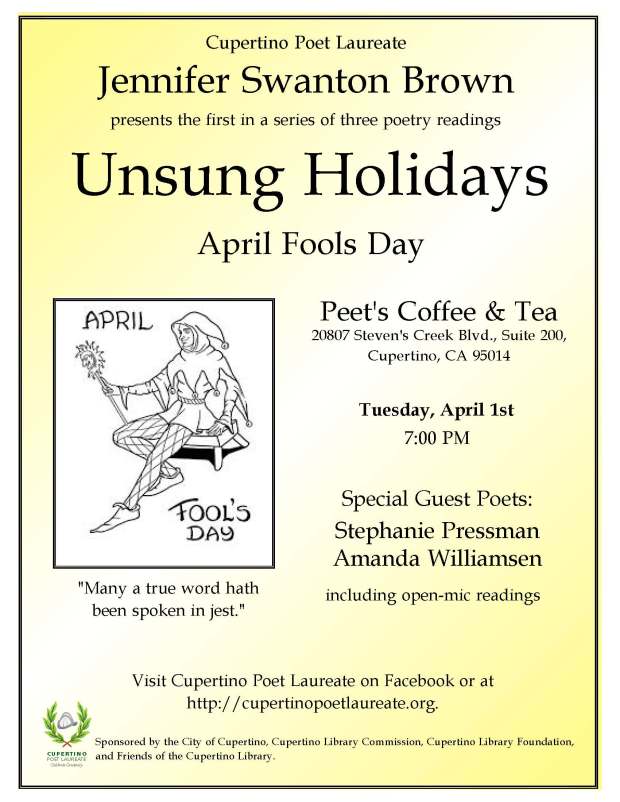
California State Poetry Out Loud Finals (Brochure)

California POL website. Thanks to the California Arts Council.

I’ll be one of the judging team (technically the prompter) at this exciting event this weekend in Sacramento. I’m so excited!

Learn more about this amazing program here.

Prompt #23 Green Birds

Happy (not Saturday) Monday! and Happy St. Patrick’s Day (if you’re Irish or otherwise celebrate the day) and Happy Green Birds of California Day (if you’re a slightly crazed poet…)!

I missed my chance to post my prompt on Saturday, and yesterday I spent the day outdoors in the sunshine and prepping for today’s poetry teaching start at a local elementary school. Now, three cups of tea later, I’m finally recovered enough think of a prompt and write a poem to go with it. Fortunately for me, one of my favorite blogs, Audublog, affiliated with Audubon California, has provided me with this fabulous post about green birds of California to get me (and all of us) started.

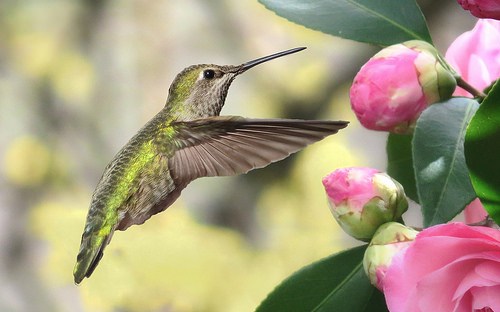
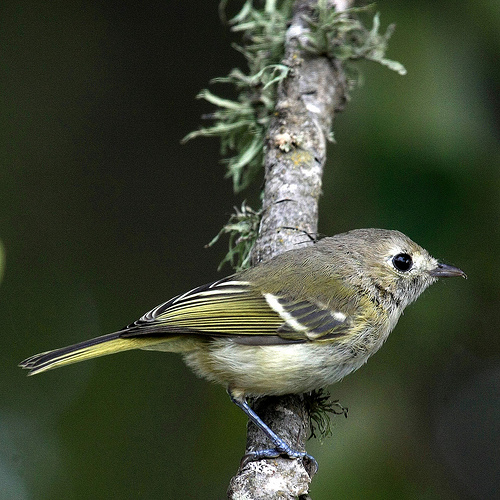
Let’s think of a poem today as something you can write that surprises you. Something you write in your own unique voice, without cliches. If you think of a green bird, you might visualize a bird you’re familiar with: a Mallard duck, an Anna’s hummingbird. And you could write a perfectly good poem about one of those. But what about the Violet-green swallow? Or the even less likely Ruby-crowned kinglet? Who names a green bird “ruby-crowned”?? I think my favorite green bird from this post is the Hutton’s vireo. I wonder who Hutton was? And why he named this sweet little fellow with the multicolored striped wings after himself?

Image

The tradition of writing poetry about birds is very Romantic (and yes, I mean that with a capital “R”). Here are a couple obvious choices:

One of my favorite bird poets writing today is Mary Oliver, who has written scads of  poems about egrets, owls, hummers.

Another favorite poet, Brenda Hillman, also writes about birds — they pop up in her strange and prickly poetry where least expected.

I couldn’t find any poems about the Hutton’s vireo, but I did find a great website that helps the birder differentiate one from a ruby-crowned kinglet — filled with great descriptions of their wings, head shape, and their songs. How is this for a delightful description of sounds that can’t be written down?

Voice is a much better character and is diagnostic once learned. The oft-heard, soft rattle of the kinglet is a dominant sound in wintering mixed flocks; it has been described as a scolding “je-dit, je-dit,” or “chiditdit” or a machine-gun “ah-a-a-a-a-a-a,” but it is not the least bit whinny. The vireo gives a typical vireo scold, a whinny descending “whee-we-we-we,” a nasal descending “cheee,” or may sing its two-part monotonous upslurred “zuwee” or “chew-wheet” song on warm days at any time of year (sometimes a downslurred “zeeoo…zeeoo….zeeoo.” In coastal California, serious singing by the vireo often begins in February when there are still a lot of kinglet around.

Your challenge for this week is to write a poem about a green bird. Investigate the Audublog, or look out your window and see what’s in your garden. Take a walk to a local pond and check out the ducks. Listen to the birds. Write down what they sound like. And then imagine that you can understand their songs — that would make a poem worthy of spring.

Prompt #22 Spring Flowers

It might be too early for many people around the Northern Hemisphere, but in California, Spring is here, full blown Spring, full of flowers and sunshine. It might seem a unforgivable cliche to suggest we write poems to Spring, but all cliches have their basis in true emotion, and nothing makes a heart swell with happiness more than the release of winter’s clutches into Spring. So let’s indulge ourselves.

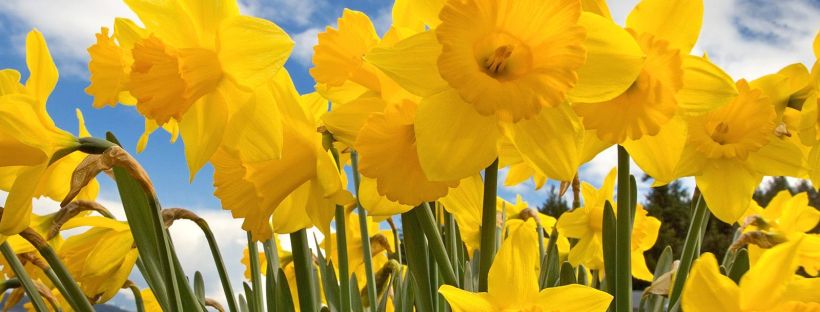
I Wandered Lonely as a Cloud” by William Wordsworth is the quintessential poem of Spring. Some people think this poem is called “Daffodils” but it has no true title, other than its first line. Especially for me, as I love daffodils, this poem has all the elements of romance, beauty, glad language, and even, in the last stanza, the note of loneliness and retreat so necessary to an artist’s live.  I offer it to you here entirely.

I Wandered Lonely as a Cloud

by William Wordsworth

I wandered lonely as a cloud
That floats on high o’er vales and hills,
When all at once I saw a crowd,
A host, of golden daffodils;
Beside the lake, beneath the trees,

Fluttering and dancing in the breeze.

Continuous as the stars that shine
And twinkle on the milky way,
They stretched in never-ending line
Along the margin of a bay:
Ten thousand saw I at a glance,

Tossing their heads in sprightly dance.

The waves beside them danced; but they
Out-did the sparkling waves in glee:
A poet could not but be gay,
In such a jocund company:
I gazed—and gazed—but little thought

What wealth the show to me had brought:

For oft, when on my couch I lie
In vacant or in pensive mood,
They flash upon that inward eye
Which is the bliss of solitude;
And then my heart with pleasure fills,

And dances with the daffodils.

Your prompt today is to write a poem to Spring. Let yourself go; indulge in happiness, in feelings of relief, pleasure, simplicity. If you feel like rhyming, go for it. We are so cynical in our modern complexity, so doubting in our rejection of beauty for beauty’s sake. Let yourself write a poem with butterflies or rainbows, with trees blossoming, with sunshine and promise.

If you want an extra challenge, spin the poem at the end inwardly — what is it that you fear about winter, about darkness that haunts you until Spring comes with the promise of a better day? What “vacant or pensive mood” is overcome for you when you think of a beautiful image, remember beautiful music?

Have fun with pure poetic pleasure today. And, don’t forget to turn your clocks ahead tonight, spring forward into the light!

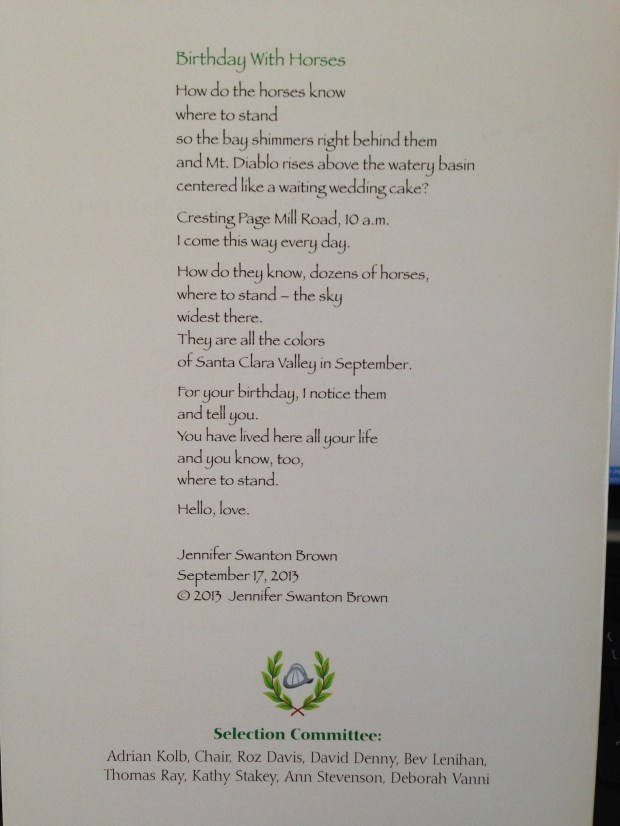
“Birthday With Horses”

This poem was written for my husband. I first read it at the September 17, 2013 Cupertino City Council meeting when I was officially appointed to the post of Cupertino’s second Poet Laureate. This is how it appeared on the back page of the program to my “Welcome Ceremony” on November 10, 2013.

Lunar New Year Poem “Prayer for the Year of the Horse”

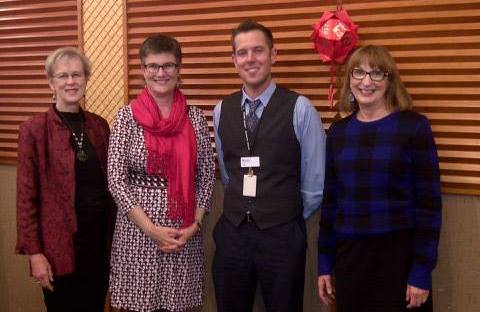
This is the poem I wrote for the Cupertino Chamber of Commerce Asian American Business Council’s annual Lunar New Year luncheon. I was born in the year of the rat, and while doing my research for this poem, discovered that I share that Chinese Zodiac sign with President Noynoy Aquino of the Philippines. I understood from my research that 1960 was a “metal” year, making me a “metal rat.” However, I met a lovely woman at the luncheon, Mei Huey Huang, the Editor-in-Chief of the World Journal, who explained that in Chinese, the “metal” would certainly be “gold” — suggesting that President Aquino and I are indeed “golden rats.” I’ll have to write another poem about that. (You can read about the photo on the Santa Clara County Library’s Facebook page.)

Prayer for the Year of the Horse

for President Noynoy Aquino of the Philippines and me

Stay away from stress.
Don’t dress unconventionally.
Praise a horse when you see one,
praise his haughty neck or humble head.

Watch out for sharp objects.
Your mettle will be tested,
but knife wielding can cut both ways.

Wear green or brown,
the lucky colors of California hills.
But keep your hand on your dance partner,
your grip may slip
on the handle of romance.

Above all keep your ratty nose down,
whiskers twitching with keen sense.
Horses have beauty and speed, it’s true,
but you can escape under the fence.

In honor of the Cupertino Chamber of Commerce
Lunar New Year Luncheon

February 14, 2014
© Jennifer Swanton Brown

Asian American Voices in Poetry

Asian American Voices in Poetry

Poem Sampler: Asian American Voices in Poetry, a collection of poets and articles exploring Asian American culture.

One hundred and six (106) entries. An abundance!

Special treats for the person who correctly identifies this Asian American poet!

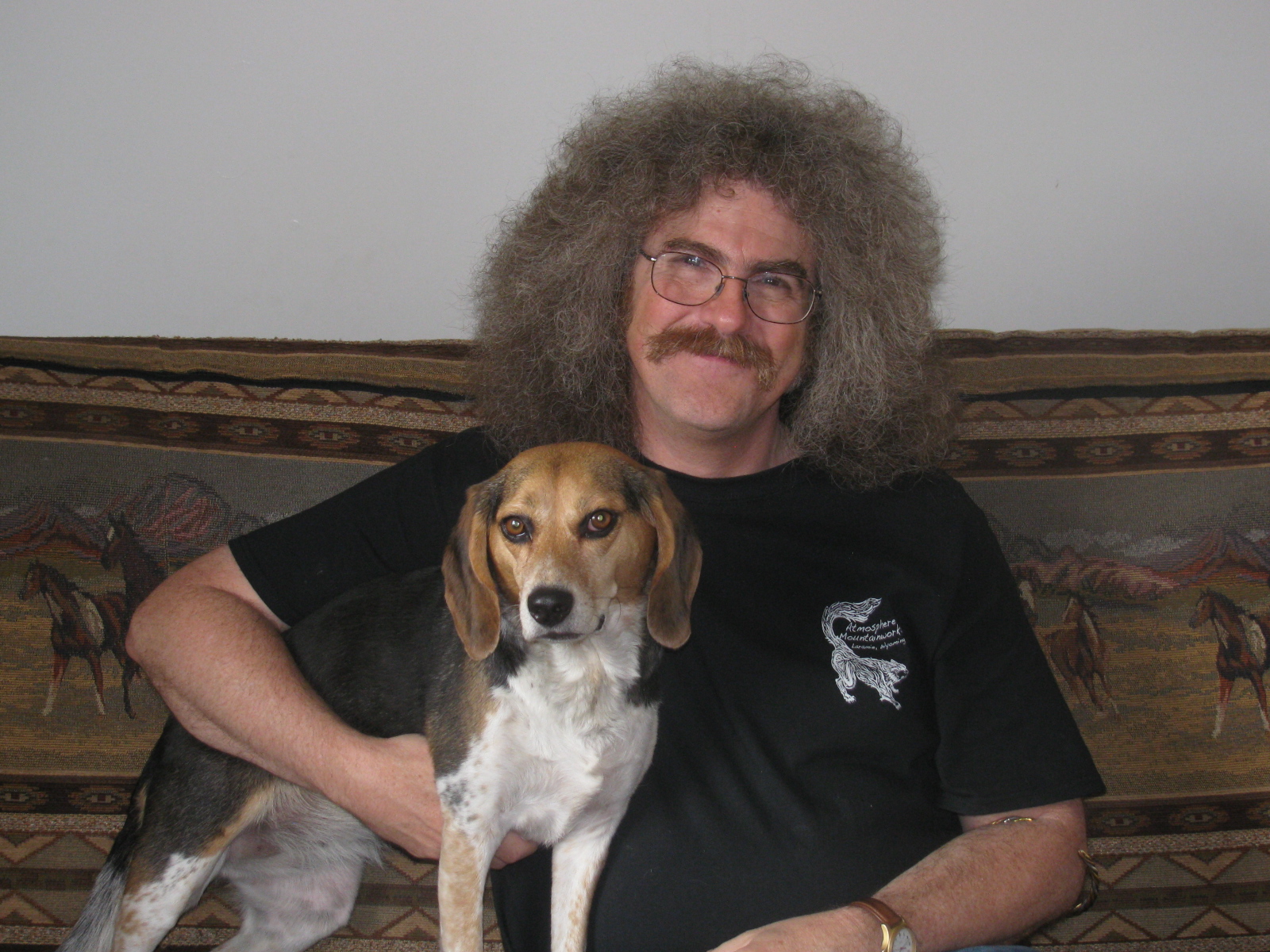
cathy-park-hong

Channeling the Duende: George Kalamaras’s “A History of Green”

From the snowy Midwest, a fellow poet laureate (albeit at the State level in Indiana) has written a lovely poem about green, based on a poem about yellow. What a gift for us, in California, on this gray rainy day.

Karen Kovacik's avatarNo more corn

George-Kalamaras George Kalamaras’s poem draws inspiration from Charles Wright’s “Yellow,” a sonnet-length catalogue replete with images of that color. But Kalamaras’s “A History of Green,” three times longer than Wright’s, evokes an even greater abundance. It careens from Fort Wayne to Greece to India, Burma to Spain, to encompass poets and shrines, plants and animals and insects, in lines thick with rhyme and sound repetitions. The color green suggests a poetics of the duende, which the Spanish poet Federico García Lorca called “the spirit of the earth,” invoking death and desire in a single whirling moment.

Kalamaras, who began his term as Indiana’s fourth poet laureate, on January 1, 2014, is currently teaching a course on the poetics of place at Indiana University-Purdue University Fort Wayne, his academic home for many years. Poets mean different things when discussing “place.” For some, it means an allegiance to region in the narrowest sense…

View original post 987 more words

Prompt #21 Your Heart

Now that February is over, we can discuss poetry about the heart without succumbing to Valentine’s Day. There is so much poetry about the heart – and it’s not all about love: romantic, unrequited, historic, young, fevered, or forgotten. I’m working on a lesson plan for a group of patients with cardiac disease, and this opportunity to think about the heart in its many guises is wonderful and intriguing. Just looking up “poetry + heart” on my favorite poetry websites has been an adventure. Here are a few things I found.

  • A Birthday” by Christina Rossetti (which might be one of my favorite poems of all time). Many of you have heard me recite at the drop of a hat, “My heart is like a singing bird.” Hear it sung here.
  • Finding the Space in the Heart” by Gary Snyder, which includes this breathtaking moment:
    O, ah!
    The
    awareness of emptiness
    brings forth a heart of compassion!
  • For years my heart inquired of me,” by Hafez, translated and with notes.
  • Heart” by Catherine Bowman, which worries about the heart in modern language of anguish, comparing it to an asp.
  • Sacred Heart” by Lee Briccetti, and speaks both of the valentine and about the heart’s physicality:
    “it was wet, like a leopard frog on a lily pad, / had long tube roots /”
  • Pericardium” by Joanna Klink, perhaps my favorite new find, which closes in this extraordinary way:
    “the way the body has always been waiting for the heart to sense / It is housed, it is needed, it will not be harmed.”

You get the picture. Many ways the heart has captivated artists, scientists and lovers throughout history. Many poems.

I’d like to encourage you to write about the heart. Try not to think about “love” per se, but of course, if it sneaks into your poem, that’s okay. Think about the heart as an engine – the miraculous things it does for your body. Think about your heart as an instrument – beating out the rhythm of your life. Think about the heart of someone else – how knowable is it? What about illnesses of the heart?

I’ll close with a sweet song I learned as a child, written (or at least recorded) by Shakespeare for The Merchant of Venice.  The little song is titled “Love” in some books, and suggests the beginning of love is the eyes, not the heart at all. There are many recordings and videos on YouTube, but this is the version I learned to sing as a teenager, though not quite like this.

TELL me where is Fancy bred,
Or in the heart or in the head?
How begot, how nourishèd?
Reply, reply.
It is engender’d in the eyes,
With gazing fed; and Fancy dies
In the cradle where it lies.
Let us all ring Fancy’s knell:
I’ll begin it,—Ding, dong, bell.
Ding, dong, bell.

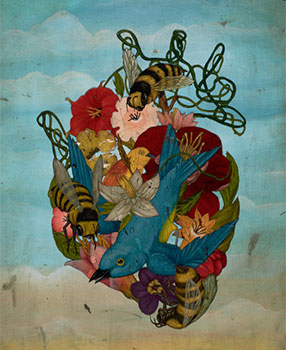
The beautiful image at the top of the post is from the Spring 2014 issue of Stanford Medicine, a beautiful magazine.

Finally, here is another illustration from that magazine. I encourage you to read about “The Mysteries of the Heart” and how this most sturdy and intricate organ is “yielding to research.”

heart birds

Poet Laureate Launch Event / Saturday, March 15 / 3-4:30pm

David Perez will be feted into his Laureateship on March 15. Be there or be a poetry party-pooper.

David Perez's avatarSanta Clara County Poet Laureate Blog

launch_plane

You are invited to the Poet Laureate Launch Event and Reception for newly appointed Laureate, David Perez, on Saturday, March 15.

Free to the public, the reception opens with music from a live jazz trio and hors d’oeuvres courtesy of Cafe Stritch. Mike McGee hosts. Former Poet Laureate, Sally Ashton, and Director of the School of Arts and Culture, Tamara Alvarado, offer remarks on the role of Poet Laureate and David’s contributions to South Bay arts communities.  David comments on his vision for the next two years and gives a reading consisting of poems from his book and some newer works. Guests are welcome to stay for a meet and greet after David’s reading.

Date / Time: Saturday, March 15  / 3 to 4:30pm

Location: Campbell Library, Community Room: 77 Harrison Ave| Campbell, CA 95008

Facebook users, please RSVP: https://www.facebook.com/events/486894711430629/

Twitter users,  you can receive updates for all of David’s projects by following him  

View original post 1 more word