A Request for Youth Poetry About Ferguson

In this New York Times article, read about a request (internationally!) for youth to write and share poetry in response to what happened in Ferguson, when unarmed black teenager Michael Brown was shot and killed by police, and the protests and violence that followed.

This project is produced by the Off/Page Project, which combines the analytical lens of The Center for Investigative Reporting with the groundbreaking storytelling of the literary nonprofit Youth Speaks. Living at the intersection of youth voice and civic engagement, the Off/Page Project provides a multimedia platform for young people to investigate the issues and stories that would otherwise be silenced.


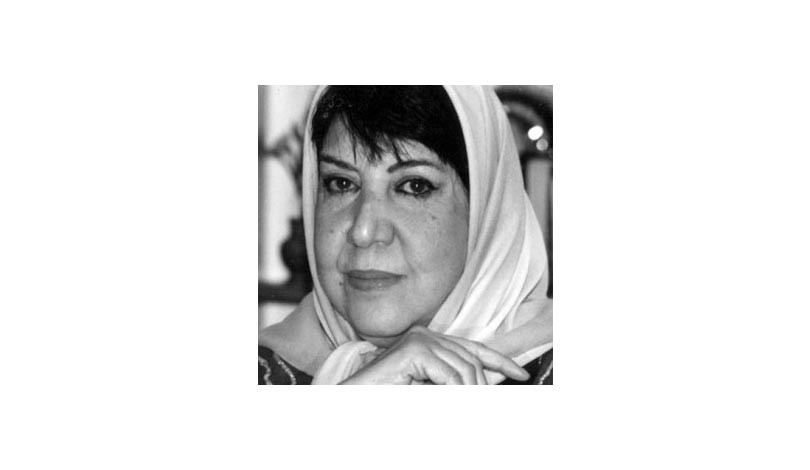
Iranian Poet Simin Behbahani

An important poet, known and beloved by many, as the “Lioness of Iran,” has passed away. You can read some of her poems and click through to listen to interviews with her in this NPR story. (The photo above is from that story, credited to Behrouz Mehri/AFP/Getty Images.)

Here is a great story about her fight for women’s rights (from the Washington Post).

At this great website, you can read in English or Iranian, poetry and commentary. You can also see the video of President Obama reading her poetry. This photo is from that site. I love the look in her eyes — far away gazing with full knowledge and ferocity.

I look forward to learning more about this woman’s poetry. Share a comment here if you already are a fan.

020-14210f0929


Prompt #38 : Trees & Apologies

My last prompt was August 3. Today is August 19. I’ve been struggling this summer with an old friend, the demon depression, and just not feeling like writing (or doing much of anything). When you’re feeling low, getting out of bed is often the only goal in a day (fortunately, I’m not doing that poorly this time) and for me there have been days when just getting to work is an achievement. So be it.

Additionally, with all the news in the world being so difficult these days, I know many sensitive people, many of them poets (like any other kind of artist) who’ve been feeling the pain a little more in the heart than at other, less news-anguish-y times. I’ll be posting (to my other blog A Twirly Life) a collection of links I’ve appreciated in the past month, in case you’re interested in how some other people are weathering.

This poetry prompt is about trees! Today, my commute coincided with The Writer’s Almanac and the poem was “The Country of Trees” by Mary Oliver. Unfortunately, the text of the poem is not available, probably because her book Blue Horses is not even published yet!  But it was such a beautiful poem, and it contains a section in which she’s talking about the trees and listing the things into which they have been made: houses, fences, bridges. I thought, “Ah ha! That’s a great idea for a poem prompt” — write about all the things that might have started out life as a tree. What do trees mean to you? Just look around you — on my desk right now I can see a pencil, a book, the desk itself, the poster on my wall, the photo of a tree in a wooden frame. Then there are the wooden soles of my shoes and the wooden buttons on my jacket. I am surrounded by the spirit of trees.

Because I will not leave you without a poem to read, I offer you a couple of other poems about trees, one “rather slight” and one serious.

Cover_kilmer_1914_trees_and_other_poems

“Trees” by Joyce Kilmer is perhaps the most famous tree poem ever. The opening couplet, “I think that I shall never see / A poem as lovely as a tree,” has been much lampooned, but it’s actually a great poem. Read all about it here. There’s even a very cute picture of Mr. Kilmer as a college kid — did anyone else always assume Joyce was a woman? Bad on me!

“Tree” by Jane Hirshfield is one of the poems I have closest to my heart. You can read it here, and hear her reading it too. I love the small details, the sounds (oh! the branch tips brushing!) and the questions it poses so gently: who will last, what is important to you, what are you going to choose? This poem has special meaning for those of us in California. Cupertino has many redwood trees, and they’re not getting any smaller!

Tree
 
It is foolish
to let a young redwood   
grow next to a house.
 
Even in this   
one lifetime,
you will have to choose.
 
That great calm being,
this clutter of soup pots and books—
 
Already the first branch-tips brush at the window.   
Softly, calmly, immensity taps at your life.
 
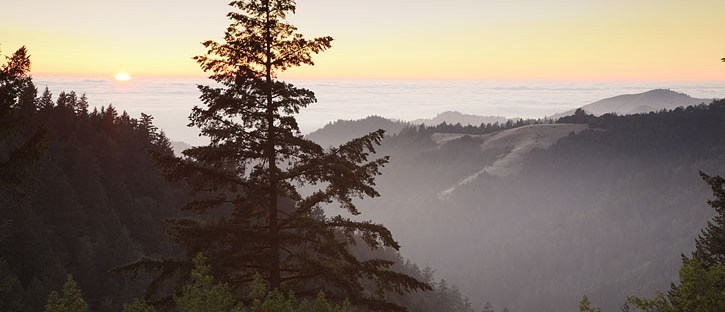
(The photo at the top of the post is from a great site that describes all the places in the SF Bay Area where you can hike and seek old-growth redwood trees.)

Prompt #37: Love and the Older Body

Love poetry! Of course — the romance, the longing for connection, the passion — the heartbreak! So much love poetry is written by the young and for the young. And it should be that way. Do any browsing at all, in books or online, and love poetry is everywhere. At the Academy of American Poets, their collection of Love Poems is legion, beginning with the most famous perhaps of all, Elizabeth Barrett Browning‘s famous “How Do I Love Thee, Let Me Count The Ways.”

How do I love thee? Let me count the ways.
I love thee to the depth and breadth and height
My soul can reach, when feeling out of sight
For the ends of being and ideal grace.
I love thee to the level of every day’s
Most quiet need, by sun and candle-light.
I love thee freely, as men strive for right.
I love thee purely, as they turn from praise.
I love thee with the passion put to use
In my old griefs, and with my childhood’s faith.
I love thee with a love I seemed to lose
With my lost saints. I love thee with the breath,
Smiles, tears, of all my life; and, if God choose,
I shall but love thee better after death.

But, love is not only for the young, and love poetry is not only written by young poets. I stumbled upon a poem this week, on The Writer’s Almanac, called “Surfer Girl” by Barbara Crooker. The speaker in the poem is “on the far side of sixty,” “athletic as a sofa.” The poem opens with her walking on the beach, spotting a surfer, “sleek as a seal.” The poem goes on as the speaker imagines herself in a younger body, “lithe and long-limbed,” with her “short tousled hair full of sunshine.” The poem describes the health and power of a younger body, a young person’s ambitions and dreams, “Nothing more important now than this balance between / water and air, the rhythm of in and out.” This poem is about longing and love, for the surfer boy and for the younger self remembered.

Another poem I found this week, titled “You Make Love Like the Last Snow Leopard” by Paige Taggart, came through my Poem-A-Day email subscription from Poets.org. I don’t always have time to read them when they come, but this title really caught my eye. What would that be like, to be the last snow leopard on earth, and to make love — would it be fiercely, with fear and the knowledge of certain death, impending loss, would it be tenderly, aware of an aching body, the absence of youthful power? I find Taggart’s poem strange, with ambiguous language, some disquieting sexual allusions and unusual images of time passing. In the first stanza, “Time hunts your shadows.” In the second stanza, the speaker addresses her lover, “Your white hair flocked. It’s old age that makes / you kill for food,” pairing an image of old age with an image of violent survival. The last two lines are the most disturbing and beautiful in the poem, I think: “A cliff of umbrellas and memory / shaping your every move.”

These two poems spoke to me of the ways we think of physical love as we get older: full of the aches and memories of the body, and the longing of the heart for something powerful in today’s experience. Love isn’t only for the young.

You can see some of Paige Taggart’s jewelry “Bling that Sings” here on Tumblr and here at her website. She seems to have a mission to decorate poets wherever she finds them.

If you want to write a poem, write a love poem, modeled after one of the ones on the Poets.org website. If you are inspired to try something else, imagine what it would be like to be a passionate young soul trapped in an older and no-longer powerful body. Describe the way the body moves and the way the spirit of love moves and how those types of motion agree or disagree, work in harmony or collide.

The photo of the female swimmer is by Etta Clark, from her book of the same name, “Growing Old is Not for Sissies.”